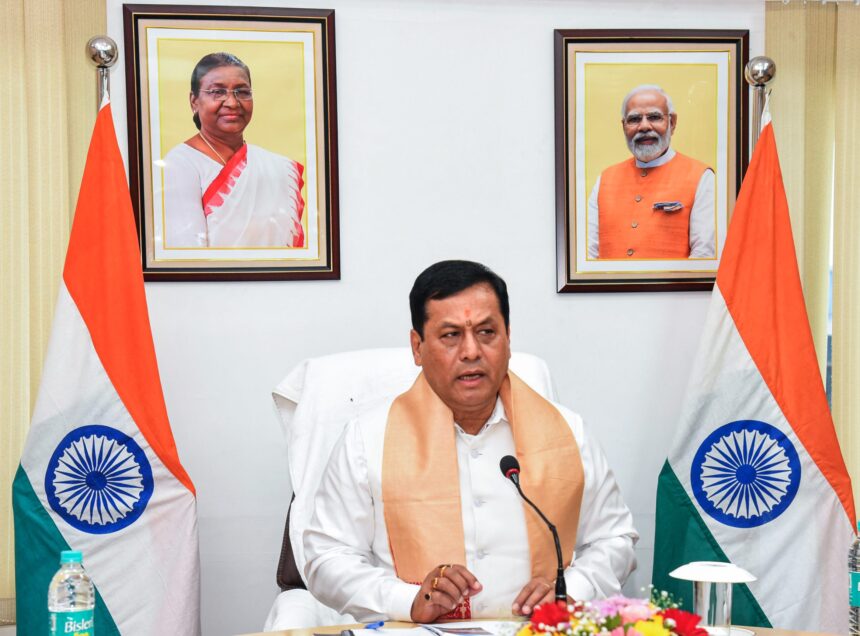
V.O. Chidambaranar Port Authority (VOC Port) has reduced its net carbon emissions by 45 per cent, emerging as one of India’s leading examples of sustainable port-led development and green maritime transformation. The achievement was highlighted by Union Minister for Ports, Shipping and Waterways, Sarbananda Sonowal, during an event at the port where several sustainability and technology initiatives were launched.
According to VOC Port’s first Sustainability Report, renewable energy sources now offset nearly 94 per cent of the port’s energy consumption, reflecting the rapid progress made in reducing dependence on conventional energy sources and lowering the port’s environmental footprint.
The port’s decarbonisation journey has been supported by extensive investments in renewable energy infrastructure, including solar and wind power projects, electric mobility initiatives, green hydrogen development and alternative marine fuels. VOC Port has also implemented digital monitoring systems and energy-efficiency measures aimed at improving operational sustainability.
Over the past year, the port has accelerated its transition into a clean-energy hub through a series of strategic partnerships. These include agreements for green ammonia production, bunkering infrastructure and sustainable fuel development, positioning Thoothukudi as a potential gateway for low-carbon maritime fuels serving domestic and international shipping routes.
VOC Port has already been recognised as a National Green Hydrogen Hub under India’s National Green Hydrogen Mission. The port is pursuing multiple projects involving green hydrogen, green ammonia and green methanol, alongside investments in renewable power generation and carbon management systems.
The authority has also introduced carbon credit initiatives linked to its renewable energy assets. Five renewable energy projects with a combined installed capacity of 12.4 MW have been registered under carbon credit mechanisms, creating an additional revenue stream while supporting long-term sustainability objectives.
Industry observers increasingly view VOC Port as a model for the future of Indian maritime infrastructure, where cargo growth, industrial development and environmental stewardship are being pursued simultaneously. The port’s ongoing investments in green fuels, renewable energy and low-carbon logistics are expected to play an important role in India’s broader maritime decarbonisation strategy.
The net carbon emissions already reduced by 45 per cent and a growing portfolio of green energy projects under development, VOC Port is positioning itself at the forefront of India’s transition towards sustainable and globally competitive maritime infrastructure.