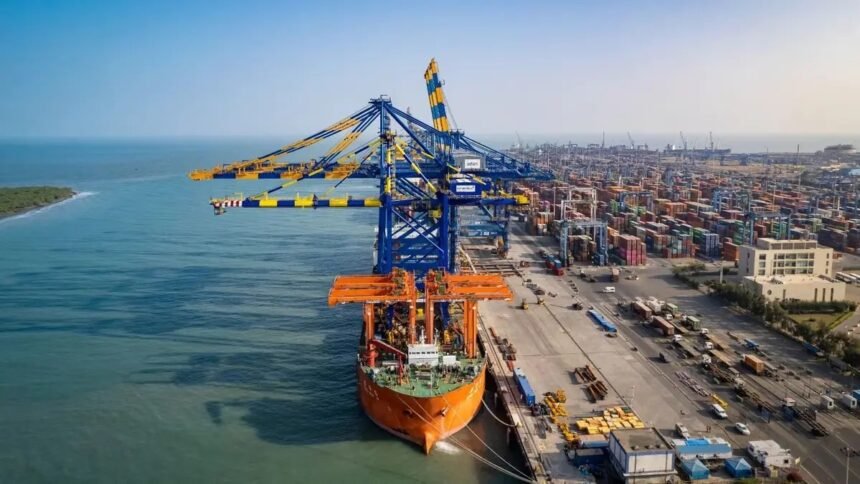
Vizhinjam International Seaport is set to handle a major import cargo movement involving 1,500 metric tonnes of natural rubber imported from Africa for tyre manufacturer MRF. The consignment, comprising 60 containers, will be transported from the port to the Kottayam Inland Container Depot (ICD), marking the first major import cargo movement linking Vizhinjam with the inland facility.
According to Vizhinjam International Seaport Ltd (VISL), the shipment is covered under three Bills of Lading, with 20 containers allocated to each. The arrangement is expected to reduce transportation time and logistics costs for MRF while improving the movement of imported raw materials to its operations.
MRF has selected Vizhinjam as the Port of Destination to avoid the existing transshipment route through Mumbai, which can take up to a month. Under the new arrangement, the containers will be moved by road to Kottayam ICD, where the cargo covered under each Bill of Lading will undergo customs examination and other mandatory clearance procedures.
Following Customs Out of Charge (OOC) clearance, the containers will be transported in the same trucks to MRF’s centralised warehouse in Kochi. The shorter logistics route is expected to facilitate faster availability of natural rubber and improve supply-chain efficiency for the tyre manufacturer.
The arrangement also creates an opportunity to reuse empty containers for export cargo. Once the rubber is unloaded at MRF’s warehouse, the empty containers can be stored at the Kottayam ICD container yard and made available to exporters. Currently, exporters often have to transport empty containers from Kochi to Kottayam before loading their consignments. Making import-generated containers available locally could reduce this additional movement, saving transportation time and costs.
The integrated import-export model is expected to improve container utilisation and provide a more efficient logistics arrangement for importers, exporters and service providers. It could also strengthen Kottayam ICD’s position as a regional cargo and logistics centre, encouraging further import and export activity through the facility.
VISL said the initiative aligns with the objectives of Mission Samudra, conceived under the leadership of the Chief Minister to strengthen Kerala’s maritime trade and cargo transportation potential. Measures to improve the infrastructure and operational capacity of Kottayam ICD are also being undertaken to attract additional trade and enhance the facility’s competitiveness.