The Uralungal Labour Contract Co-operative Society (ULCCS), one of India’s largest cooperative infrastructure organisations, has successfully completed three major infrastructure projects worth ₹453 crore, highlighting its growing capabilities in coastal engineering, complex bridge construction and climate-resilient transport infrastructure.
The completed projects include a large coastal protection system, a major bridge built across backwaters, and a flood-resilient highway corridor. Together, these developments demonstrate ULCCS’ ability to execute technically challenging infrastructure projects in geographically demanding environments while supporting connectivity, community safety and regional economic growth.
With more than a century of experience and over 7,500 completed projects, ULCCS has expanded from a regional cooperative initiative into a multi-sector infrastructure developer undertaking large-scale transportation, coastal engineering and urban infrastructure projects across India.
Remeshan Palery, Chairman of ULCCS, stated that the successful delivery of these projects reflects the organisation’s strong engineering expertise and project management capabilities. He noted that projects ranging from coastal protection systems to large bridge construction and climate-resilient road networks show how cooperative institutions can deliver technically complex infrastructure that strengthens connectivity, safeguards communities and supports economic development. He also emphasised that cooperative-led models can play an increasingly significant role as India continues to expand infrastructure development across the country.
Coastal Protection Infrastructure
One of the key projects involved the development of a 7.31-kilometre coastal protection system designed to address shoreline erosion and recurring sea intrusion, a growing concern for several coastal regions in India.
The project required extensive marine engineering work, including the installation of approximately 1.25 lakh tetrapods and nearly 8.5 lakh tonnes of granite armour units along with groyne structures to stabilise shoreline sediment movement. Such infrastructure plays a critical role in protecting coastal settlements from increasing climate-related risks and extreme weather conditions.
The project was recognised with the Outstanding Infrastructure Project 2023 award by the Indian Concrete Institute Kochi Chapter, acknowledging the high engineering standards and execution quality achieved during construction.
Bridge Construction Across Backwaters
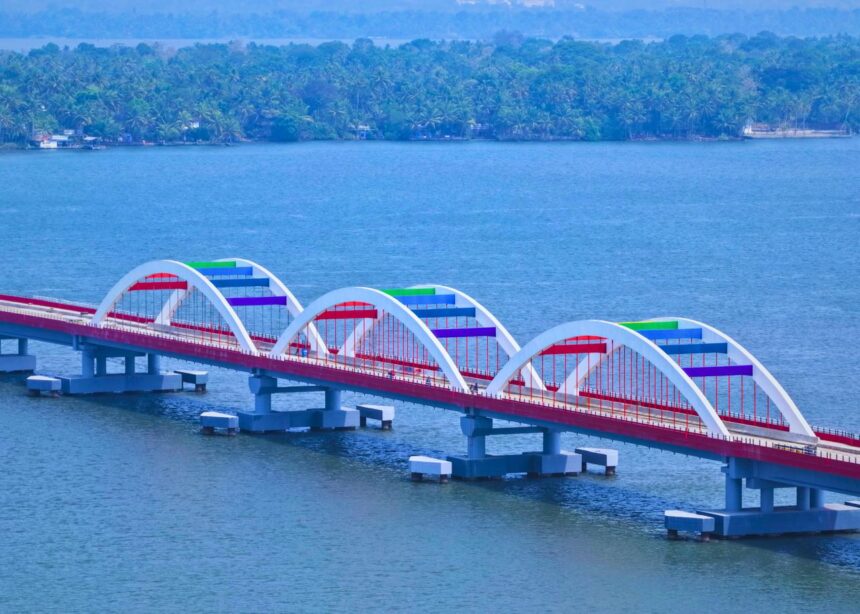
ULCCS also delivered South India’s longest over-backwater road bridge, spanning 1,755 metres and constructed almost entirely above water. The project required specialised marine construction techniques using barges and floating platforms to facilitate work in water-dominated conditions.
The bridge features 55-metre bow-string arch spans along with several long spans designed to meet inland waterway navigation requirements while improving road connectivity for island communities that were previously difficult to access.
Projects of this nature highlight the specialised expertise required for bridge construction in coastal and riverine environments, which are becoming increasingly important for infrastructure development in India.
Climate-Resilient Highway Development
The third project involved the construction of a semi-elevated highway corridor designed to remain functional during seasonal flooding. By elevating critical sections of the roadway above flood levels, the project ensures uninterrupted transportation even during adverse weather conditions.
Such resilient road infrastructure helps maintain economic activity and mobility for surrounding communities while reducing disruptions caused by flooding. Designs incorporating climate adaptation measures are becoming increasingly important as India strengthens its transportation networks against environmental challenges.
The completion of these projects demonstrates ULCCS’ ability to deliver large and technically demanding infrastructure across diverse terrains and engineering conditions. As India continues to invest in coastal resilience, transportation connectivity and climate-adapted infrastructure, ULCCS aims to further leverage its cooperative model and long-standing engineering expertise to contribute to the country’s expanding infrastructure landscape.