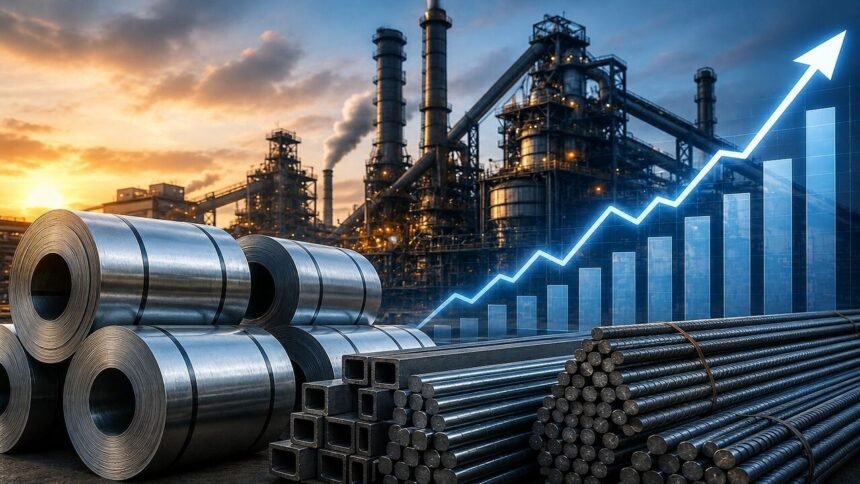
India’s domestic steel demand is expected to remain strong over the medium term, with capacity utilisation projected to stay above 90 per cent, as consumption growth continues to outpace capacity additions, according to a research report by Kotak Institutional Equities. The report expects domestic steel demand to grow at around 7 per cent CAGR between FY2026 and FY2029, supported by sustained industrial and infrastructure activity.
The report noted that domestic steel consumption has maintained its momentum, registering 7.8 per cent year-on-year growth in YTD FY27, following 7.7 per cent growth in FY2026. This comes after four consecutive years of double-digit growth in domestic steel consumption, highlighting the continued strength of underlying demand.
Steel trade volumes have also increased during the period. Steel exports rose 35 per cent year-on-year to 2.3 million tonnes, although imports grew at a faster pace, increasing 36.7 per cent to 2.8 million tonnes in YTD FY27. Kotak said ongoing investigations into anti-dumping duties could help keep imports under control.
On the pricing front, long steel prices have recovered by around 12 per cent over the past month, reversing the sharp correction seen during June and July 2026. According to the report, tighter domestic market conditions and improving seasonal factors as the monsoon recedes could provide further support to steel prices in the coming months.
Spot prices for primary and secondary rebar have increased by approximately ₹5,600 per tonne, reaching around ₹53,900 per tonne and ₹47,900 per tonne, respectively. Despite the recent recovery, prices remain about ₹6,000 per tonne below their April 2026 highs. In the flat steel segment, domestic hot-rolled coil (HRC) prices are currently around ₹58,800 per tonne, representing an approximate 3 per cent discount to import parity. Kotak expects the possibility of higher regional steel prices, citing weak Chinese steel spreads caused by rising costs.
Raw material prices, meanwhile, are showing mixed trends. Coking coal prices have risen around 5 per cent from first-quarter levels, mainly due to supply constraints, including mine accidents in China and lower Russian production linked to diesel shortages. In contrast, domestic iron ore fines prices have declined by about 7 per cent from June-end levels, in line with softer international iron ore markets.
Overall, the report points to a favourable medium-term outlook for India’s steel sector, with robust infrastructure and industrial demand expected to keep capacity utilisation elevated and support steel prices, particularly as the impact of the monsoon eases and construction activity picks up.