Kamdhenu’s focus on innovation extends beyond product innovation to include process optimisation and even raw material sourcing. We are proactively addressing sustainability concerns by replacing obsolete practices with latest innovations in the shop floor and raw material sourcing practices. Our business model also allows us to operate closer to the end users thereby eliminating the need for long-distance logistics operations.
Q. How do you assess the current demand trajectory for TMT bars and structural steel in India’s construction and infrastructure sectors, especially with increased government spending under PM Gati Shakti and Smart Cities initiatives in 2025?
In India, demand trajectory for TMT bars and structural steel is definitely increasing, with the government’s sustained push through initiatives like PM Gati Shakti, Smart Cities, Bharatmala, and metro expansions. These projects require robust, high-performance steel, especially TMT bars. We’re seeing a very healthy and consistent demand from both public infrastructure and private real estate sectors. Despite global headwinds, India’s steel consumption is experiencing strong growth. However, the per capita consumption of steel in India is still below the global average, which just shows the headroom for future growth.
At Kamdhenu, we’re ramping up production and expanding distribution to be part of this transformation story. Our retail-centric franchise model allows us to respond quickly and costeffectively to these growing needs, even in Tier II and III cities.
Q. How is Kamdhenu addressing carbon emissions and environmental impact across its production footprint?
Kamdhenu’s focus on innovation extends beyond product innovation to include process optimisation and even raw material sourcing. We are proactively addressing sustainability concerns by replacing obsolete practices with latest innovations in the shop floor and raw material sourcing practices. Our business model also allows us to operate closer to the end users thereby eliminating the need for long-distance logistics operations. The quality of our products ensures the best possible life for structures with minimal maintenance and repairs. The sum of all these results in a markedly lower carbon footprint without sacrificing operational and business goals.
Q. What is distinctive about the double-rib interlock design of the Kamdhenu Nxt series, and how does it improve fatigue strength and ductility for structures subject to dynamic or seismic loading?
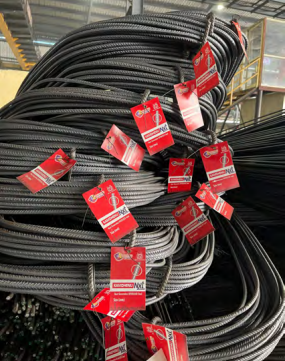
Kamdhenu Nxt is one of our best innovations in TMT Bar. Its double-rib angular interlock design isn’t just for aesthetics. It plays a crucial structural role. Its unique design sets a benchmark for better interlock with concrete mix, giving more power to
the structure. The two angular ribs on this steel bar amplify the interlock strength between steel and concrete, thereby providing optimum security to structures that are subject to unexpected forces like seismic, dynamic impact etc. This makes it
suitable for concrete reinforced structures like bridges, flyovers, dams, thermal and hydel plants, industrial towers, skyline buildings, underground platforms.
This quality makes it especially useful for smart cities, vertical constructions, and construction in high seismic zones. It’s the kind of design innovation that combines performance with peace of mind for architects, builders, and end users.
Q. Kamdhenu has adopted a unique franchise-based manufacturing model. What do you see as the core strengths and weaknesses of this model in terms of scalability, quality control, and innovation implementation?
Our franchise-based model has been our biggest strength helping us scale rapidly. We now have 400 distributors and 10,000+ dealers and over 80+ franchise manufacturing units spread across the country enables deep market penetration even into Tier II and III cities.
The advantage of this model lies in its agility. We can quickly respond to regional demands, cut down logistics costs, and ensure last-mile delivery. Maintaining uniform quality across so many units is challenging. We tackle these challenges with our robust quality control process, regular audits, and strong training programs. We’re also working closely with channel partners to implement innovations faster.
Q. Kamdhenu’s steel portfolio includes TMT bars, structural steel, color-coated sheets, binding wire, and more. How would
you classify these in terms of profitability, scalability, and brand potential across different customer segments?
The growing portfolio of products under our brand signifies the growing trust of our customers and rise in market share for our
products. Our endeavour to ensure the best possible quality products at affordable rates has turned customers into our ambassadors. With a vibrant stakeholders connect program we were able to ensure a consistent and organic growth in market share driven by the quality of the product and not just on the back of marketing outreach. Such a growth is ideal for long term profitability, scalability and brand value in the market.
Q. Given Kamdhenu’s wide-ranging product offerings, how would you approach developing an integrated value bundle or
ecosystem offering for large infrastructure or housing projects?
Our products have achieved broad-based acceptability in small residential construction as well as large scale projects with strategic importance to the nation. Our share in the organized retail branded TMT segment stands at industry leading 20 percent. Other products in our portfolio are also doing well in the respective segments and are witnessing a steady organic
growth. Along with product enhancements we are also looking at introducing new product lines with innovation and quality as the backbone to deliver an integrated value bundle or ecosystem offering for small as well as large scale infrastructure projects in the coming days.
Q. What are the key focus areas for Kamdhenu in the next 3–5 years in terms of capacity expansion or market penetration?
For Kamdhenu, the main driving force has always been to offer high quality products at affordable price points to the end users. The focus on innovation and quality has stood us on good grounds. Today we have a strong 20 percent share in the organized retail branded TMT segment with an installed capacity 52.5 lakh metric tonnes. Our focus on offering highquality products at affordable prices remains a key factor in sustaining our leadership in this space. In the last financial year FY2025, we sold 35 Lakh metric tonnes and we are expecting 15% of growth in TMT Sales in the next three years to achieve sales volume of around 50 Lakh metric tonnes by the end of FY2028.