GS Caltex has publicly committed to reducing carbon footprint and moving toward circular economy models. Our R&D facility in Korea and our India business are both working on new formulations, recycled materials and performance additives aligned with that goal.
Q. GS Caltex India has been at the forefront of introducing advanced lubricants and engine oils for the Indian market. How do these innovations align with the evolving needs of the country’s automotive and industrial sectors?
At GS Caltex India we believe that innovation must meet real-world operational demands. Across the automotive and industrial sectors, India is seeing growing expectations – higher productivity, harsher operating-environments, tighter emissions and higher uptime demands.
We have repeatedly emphasized that our baseoil platform (Group II/III i.e. Kixx Lubo) and carefully balanced additive formulations give us the foundation to respond to that For example, our industrial-OEM portfolio does more than simply meet a specification, we focus on all cost-drivers — product cost, maintenance cost, administration cost — so that equipment life
is extended and risk reduced.
In the automotive space, engine oils and transmission fluids must keep pace with engine design changes, higher temperatures, smaller sumps, increased loads and tougher serviceintervals.
So, in short: our innovations align with evolving needs by bringing global lubricant technology, localizing it for Indian conditions, and delivering value in reliability, efficiency and durability.
Q. What key technological advancements have been incorporated to ensure high performance while maintaining sustainability to reduce environmental impact?
GS Caltex has publicly committed to reducing carbon footprint and moving toward circular economy models. Our R&D facility in Korea and our India business are both working on new formulations, recycled materials and performance additives aligned with that goal.
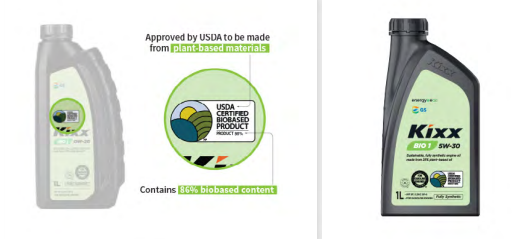
One such example is of Kixx BIO1 (plant-based or bio-derived lubricants), the key technological steps include:
- Using feed-stocks and base-oil technologies that deliver high oxidation and thermal stability, so that plant-based does not mean performance compromise.
- Designing additive packages and formulation balancing that ensure film strength, wear protection and fuel-economy benefits remain at par with conventional oils. We do not develop lubricants for the sole purpose of being able to claim a high number in energy efficiency or any other single attribute but taking a holistic view of the lubricant’s lifecycle: how raw materials are sourced, how reuse or recycling is integrated, how manufacturing/packaging logistics are
optimized. - Focus is towards rigorous circular practices, waste-plastic recycling, used-oil re-refining.
Thus, like in Kixx BIO1 or for such initiatives our objective is clearly to deliver high-performance lubrication whilst lowering environmental footprint, not treating one objective in isolation.
Q. With sustainability becoming a key priority, how does GS Caltex India ensure that its products not only deliver high performance but also help reduce the overall carbon footprint of the automotive and industrial sectors?
Sustainability is integral to our strategy rather than a side hustle . Lubricants can contribute meaningfully to reducing fuel consumption and emissions — and that we must engage the full value-chain.
Our approach includes:
- Extended drain interval formulations: By increasing the life of lubricants under service, we reduce lubricant lifecycle consumption, maintenance downtime and associated emissions. We have highlighted this in past interviews as a way to reduce total cost of ownership.
- Optimized base oil & additive systems: Using cleaner base oils (e.g., Group II+/III), and additive packages that reduce friction and wear, we achieve better fuel economy and reduced waste. For example, in our portfolio we showcase lower oil consumption, reduced fuel consumption and longer service life.
- Logistics, supply chain & reuse practices: We are actively embedding circular economy elements — used-oil recycling, resource efficiency, optimized packaging and green logistics — into our offerings. In fact, we are focusing in new energy business streams such as hydrogen, waste-plastic recycling and bio business alongside lubricants.
By aligning product performance with operational efficiency and environmental responsibility, we believe GS Caltex contributes to a lower-carbon, more resource-efficient lubricant ecosystem for India’s automotive and industrial sectors.
Q. As the automotive industry transitions toward hybrid and electric vehicles, how is GS Caltex adapting its base oils and highperformance lubricants to address the unique thermal, friction, and durability requirements of these advanced powertrains?
While the mainstream internal-combustion powertrain remains dominant today, the shift toward hybrid/electric architecture is a meaningful trend — and lubricant technology must evolve accordingly.
- We are leveraging our synthetic baseoil competency (Group II/III and PAO) — these oils already deliver high thermal and
oxidative stability, which is a prerequisite for newer powertrains with higher thermal loads and compact architectures. For example, past commentary highlighted that our Group II/III base-oils support high-temperature operations, smaller sumps, higher power densities. - While our current portfolio continues to address high-performance conventional engines, we are actively preparing for the fluid requirements of hybrid and electric architectures – which include new transmission fluids, thermal- anagement oils, specialty greases. Though not all of these may be public yet, our global R&D and India team are working on them.
In essence, GS Caltex is positioning itself to bridge today’s internal-combustion lubricant needs and tomorrow’s hybrid/electric lubricant challenges, ensuring performance, durability and compatibility across transitions.
Q. Polymers and specialty base oils play a vital role in modern lubricant formulations. How is GS Caltex leveraging innovations in these raw materials to enhance product performance, drive sustainability, and strengthen competitiveness across both industrial and automotive applications?
Raw material innovation underpins virtually all of what we do in lubricant development. A well-designed formulation involves the correct base oil, viscosity modifiers/polymers, additive systems, and must deliver balanced performance across all criteria.
At GS Caltex we are leveraging this in several ways:
- Our base oils (Kixx Lubo platform) derived from Group II+/III feed allow lower volatility, higher viscosity index, improved oxidation resistance, and better fuel efficiency.
- We use high-performance polymers / viscosity index improvers, shear-stability chemistries and dispersant/stabilizer additives to maintain lubricant film strength under high temperature, heavy load and extended intervals. Formulation design is fine-tuned for each application (engine, transmission, hydraulic, gear, etc).
- From a sustainability angle, better base oils and more efficient additive systems mean longer life, fewer oil changes, reduced waste and lower lubricant consumption. This strengthens our value-proposition and competitiveness.
- On the industrial side (mining, construction equipment) where reliability under harsh conditions is critical, these materials innovations translate into fewer equipment failures, lower downtime, extended intervals — all of which our customers value highly. By combining advanced raw materials with tailored application engineering and end-user support, GS Caltex ensures that our products are both high-performance and thoughtfully designed for durability, efficiency and competitiveness.
Q. As GS Caltex India continues to innovate and expand its product portfolio, how do you envision real-world operational impact for customers?
Looking ahead, what matters is integration: of technology, of sustainability, and of serviceled support — and GS Caltex intends to be at the convergence of these. Our mission is to be the preferred & trustworthy partner by offering international-quality products and services, efficiently and profitably. From the extremes of climate, terrain, equipment utilization, supplychain constraints and maintenance practices, our product along with service model will continue to be customized for Indian realities.
Ultimately our focus is on helping customers achieve lower downtime, lower total cost of ownership, higher uptime, improved fuel/energy efficiency. This is how we will deliver value and differentiate. In my own words: Our entire ranges offer ultimate reliability at all temperatures, lower oil consumption, significantly lower fuel consumption and specifically extended service
intervals.