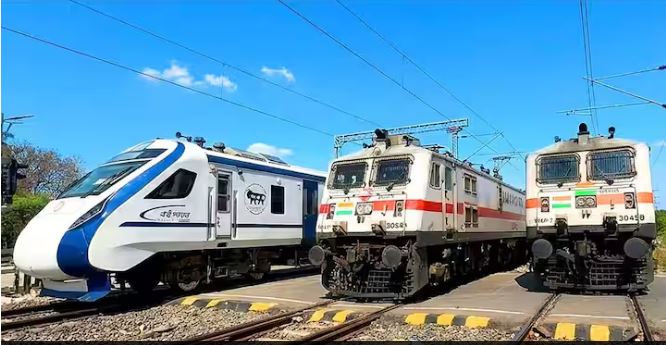
Indian Railways is preparing to test galvanised steel rails in parts of its network that are prone to heavy corrosion, especially in coastal and high-humidity regions. The move aims to extend the service life of tracks in these challenging environments and reduce the large sums spent annually on rail renewals.
Conventional steel rails in coastal belts often suffer severe corrosion and may need replacement within two to three years. By contrast, galvanised rails which are coated with zinc to resist rust could last more than four times longer under similar conditions, according to sources aware of the plan. This extended durability could help cut down on frequent replacements and lower lifecycle costs for the rail network.
While galvanised rails are estimated to cost around 10 % more upfront than regular steel rails, roughly ₹84,000 per tonne versus ₹76,000 per tonne official assessments suggest that the longer lifespan could make them more economical over time. The annual expenditure on track renewal for the railways runs into about ₹20,000 crore, highlighting the potential budgetary impact if corrosion-resistant rails prove effective.
The Research Designs and Standards Organisation (RDSO) has already approved standards for zinc thermal-sprayed rails, and Indian Railways is considering a phased procurement of about 100,000 tonnes of galvanised steel. A small pilot trial of corrosion-resistant rails has also been carried out on the Vijayawada–Guntur section of the network. These treated rails could be used not only for replacements but also on new lines, track doubling, and gauge conversion projects planned under the railways’ capital expenditure programme.
Railway planners and experts have generally welcomed the idea, but some technical questions remain. One concern is whether the zinc coating might wear off quickly under heavy train traffic, or if the galvanised surface could interfere with ultrasonic crack-detection systems currently used in safety inspections. Testing and analysis will continue before any wider rollout is approved.