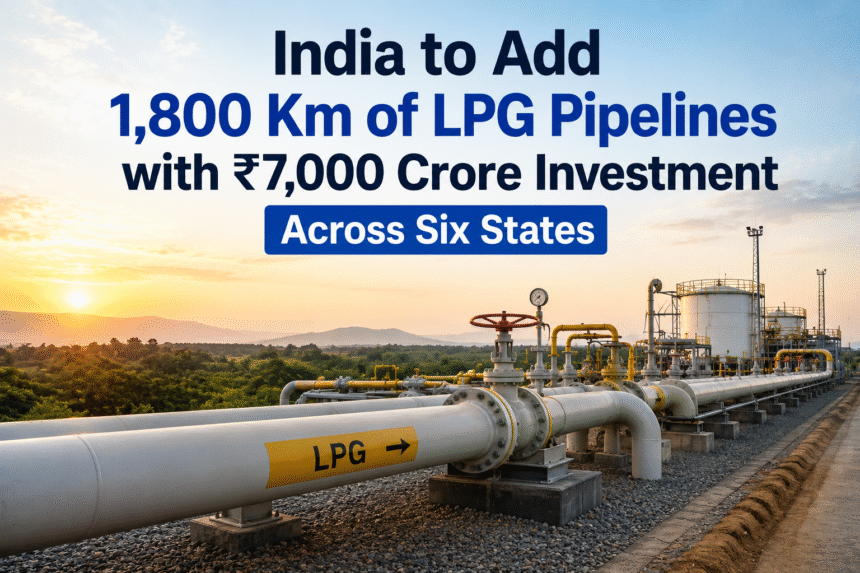
The Petroleum and Natural Gas Regulatory Board (PNGRB) has approved the development of around 1,800 km of new LPG pipeline infrastructure across six states, involving an estimated investment of ₹7,000 crore. The expansion is aimed at strengthening India’s LPG transportation network, improving supply security and reducing dependence on road-based movement of LPG tankers.
The new network will extend across Telangana, Maharashtra, Uttar Pradesh, Uttarakhand, Karnataka and Goa. The project comprises three major pipeline corridors- Cherlapally-Nagpur, Jhansi-Sitarganj and Shikrapur-Goa/Hubli, with lengths of approximately 556 km, 611 km and 633 km, respectively.
The expansion will substantially increase the country’s dedicated LPG pipeline infrastructure. Once completed, the common-carrier LPG pipeline network is expected to grow from around 7,700 km to nearly 9,500 km, providing a more extensive network for the bulk transportation of LPG across key regions.
The pipeline-based transportation system is expected to reduce the movement of LPG tankers on roads, helping lower logistics costs while easing road congestion and improving transportation safety. It could also reduce carbon emissions associated with road-based fuel transportation and provide a more reliable mechanism for moving LPG over long distances.
The investment is part of the broader effort to strengthen India’s downstream energy infrastructure and improve the efficiency and resilience of fuel supply chains. By expanding dedicated LPG transportation capacity across major consumption and supply regions, the project is expected to support the country’s growing LPG demand while strengthening energy logistics.