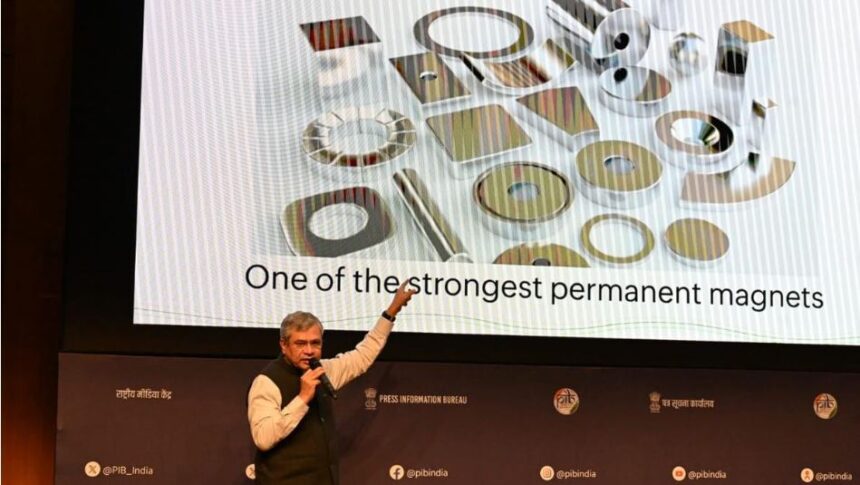
India is planning to build a domestic production capacity of 5,000 tonnes of rare earth permanent magnets by 2030, as part of a broader push to strengthen self-reliance in critical materials and reduce dependence on imports.
The move comes at a time when demand for these magnets used extensively in electric vehicles, wind turbines, electronics, defence, and aerospace is expected to rise sharply and nearly double by the end of the decade.
Currently, India remains heavily reliant on imports for rare earth magnets, despite having significant mineral reserves. This dependence has raised concerns over supply chain vulnerabilities, especially as global production and processing are concentrated in a few countries.
To address this, the government has already initiated a ₹7,280 crore scheme to develop an integrated domestic manufacturing ecosystem, targeting around 6,000 tonnes per annum capacity across the value chain from raw materials to finished magnets.
The planned 5,000-tonne capacity aligns with India’s current annual requirement of roughly 4,000 tonnes, and is expected to not only meet domestic demand but also create surplus capability for future growth.
This push is closely linked to India’s broader goals of energy transition, electric mobility expansion, and advanced manufacturing, where rare earth magnets are a critical input. The initiative is also seen as a strategic step toward building resilient supply chains and reducing exposure to global disruptions.
Overall, the plan signals India’s intent to emerge as a key player in the global rare earth magnet value chain, while supporting its long-term industrial and clean energy ambitions.