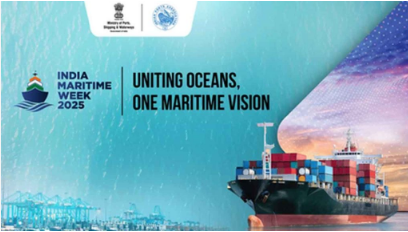
India has outlined an ambitious roadmap to position itself among the world’s top five shipbuilding nations by 2047, marking a decisive step towards maritime self-reliance. At the India Maritime Week 2025 (IMW 2025) in Mumbai, Union Minister for Ports, Shipping and Waterways Sarbananda Sonowal announced that the government is expanding domestic shipbuilding capacity and fleet strength to curb dependence on foreign shipping firms.
“Since we do not have enough Indian ships, we pay nearly $70–75 billion annually to foreign carriers. By expanding our own fleet and flagged vessels, we can save Rs 4–5 trillion each year. Our goal is to make India self-reliant in shipping and emerge as a global shipbuilding power,” Sonowal said.
During the event, which focused on shaping the Maritime Vision for Viksit Bharat 2047, India signed memorandums of understanding (MoUs) worth Rs 10 trillion, including Rs 1.55 trillion dedicated to shipbuilding. The agreements span ship manufacturing, green shipping technologies, and port infrastructure.
Over the last decade, India’s port capacity has doubled from 1,350 million tonnes per annum (MTPA) to 2,700 MTPA, alongside a sharp rise in cargo handling. Looking ahead, the government plans to quadruple port capacity to 10,000 MTPA by 2047, expand cruise tourism tenfold, and raise the share of coastal and inland waterway cargo to 12 per cent in the national logistics mix.
Highlighting the growing strategic and economic significance of the sector, Union Home Minister Amit Shah said that the government has increased the maritime budget sixfold. He cited the $10 billion Vadhavan Port and $5 billion Great Nicobar project as flagship developments that will anchor India’s global maritime growth.
A key announcement was the signing of a Maritime Cooperation MoU between India and the Netherlands, including a Letter of Intent to establish a Green and Digital Sea Corridor linking Indian ports with Rotterdam.
Several major business agreements were also inked with leading domestic and international players such as Adani Ports, JSW Infrastructure, Goa Shipyard, and the Abu Dhabi Ports Group. These partnerships will focus on green shipbuilding, sustainable port expansion, and innovative financing models, underscoring India’s emergence as a pivotal player in the future of global maritime trade.