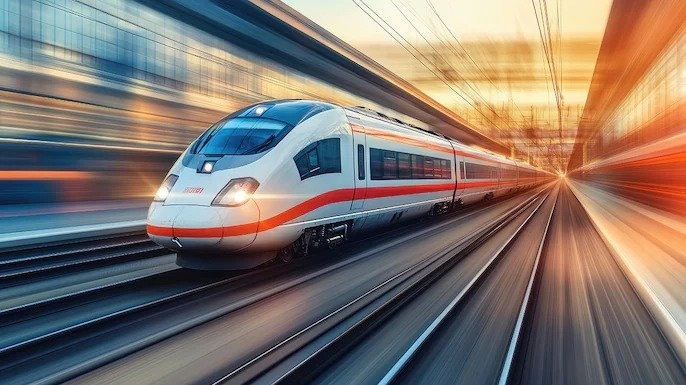
India is working on indigenous high-speed trains with a design speed of 350 kmph by 2030 as the country prepares to expand its bullet train network beyond the Mumbai-Ahmedabad High-Speed Rail (MAHSR) corridor.
The proposed B35 trainsets are being developed alongside the B28 trains, which will be the first indigenous high-speed trainsets to operate in India. The initiative is part of the broader effort to build domestic capabilities in high-speed rolling stock, signalling and related railway systems.
The National High Speed Rail Corporation Limited (NHSRCL) has already initiated a capability assessment for developing the B35. The train is being planned for future high-speed corridors including Mumbai-Pune, Pune-Hyderabad, Hyderabad-Bengaluru, Hyderabad-Chennai, Chennai-Bengaluru, Delhi-Varanasi and Varanasi-Siliguri.
The immediate focus remains on the B28 trainsets, which have a design speed of 280 kmph and an expected operating speed of 249 kmph. BEML is manufacturing the trains at its dedicated high-speed rail facility in Bengaluru, with two prototypes expected to be ready for trial runs in the first quarter of 2027.
India’s B35 programme has also emerged as the country prepares for the next generation of Japanese Shinkansen trains. Japan has indicated that production of its E10 series is expected to begin in 2030, with the trains expected to enter service later. India is therefore developing its own 350 kmph technology while keeping future options for Japanese high-speed trainsets open.
The 508-km Mumbai-Ahmedabad corridor remains the foundation for India’s high-speed rail expansion. The project has a design speed of 350 kmph and an operational speed of 320 kmph, with 12 stations planned between Mumbai and Ahmedabad. The first high-speed rail service is expected to begin in August 2027, initially on the Surat-Vapi section.
Indian Railways is also working on domestic systems required for high-speed operations. The Bharat Train Control System is being developed as an indigenous signalling and train-control platform to manage train speeds, maintain safe distances between trains and support high-speed operations.
Standardisation is another key element of the expansion plan. Future corridors are expected to use common engineering standards for components such as piers, viaducts, tracks, station structures, overhead electrification and signalling. Foundations will continue to be designed according to local soil conditions, while other systems can follow common specifications.
Seven additional high-speed rail corridors have been identified for future development, covering nearly 4,000 km. These include Delhi-Varanasi, Varanasi-Patna-Siliguri, Chennai-Bengaluru, Bengaluru-Hyderabad, Chennai-Hyderabad, Mumbai-Pune and Pune-Hyderabad. The proposed network has been associated with investments of around ₹16 lakh crore, although these corridors remain part of the future expansion plan.
The development of the B35 is intended to build domestic expertise not only in train manufacturing but also in high-speed rail engineering, signalling, track systems, specialised equipment and workforce training. The experience gained from the Mumbai-Ahmedabad project is expected to provide a technical and operational base for subsequent high-speed rail projects.