India has joined a select group of nations with the launch of the advanced ‘SkyCast’ aviation weather monitoring system at Indira Gandhi International Airport (IGI), marking a major milestone in aviation safety, weather intelligence, and airport operations.
The SkyCast system was inaugurated by Jitendra Singh and is being described as India’s first integrated next-generation aviation weather monitoring and nowcasting platform.
According to officials, only 18 countries currently operate such advanced integrated atmospheric remote sensing systems, making India the 19th nation globally to deploy this technology for aviation weather monitoring.
Developed under the government’s Mission Mausam initiative, SkyCast is designed to provide real-time weather intelligence to pilots, airlines, airport operators, and air traffic management agencies. The system is expected to significantly reduce flight delays, diversions, and cancellations caused by fog, turbulence, poor visibility, and rapidly changing weather conditions.
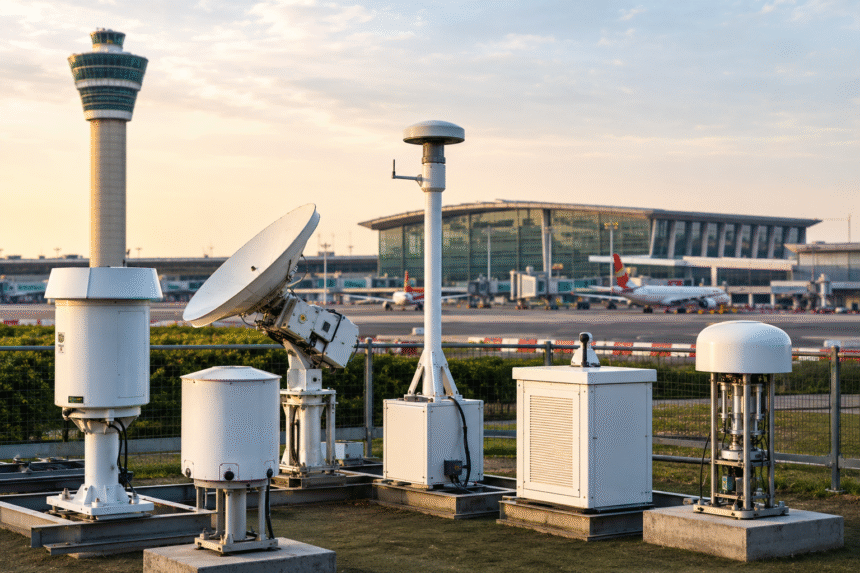
The platform combines multiple advanced atmospheric observation technologies, including Radar Wind Profiler, SODAR, Microwave Radiometer, Ground-based Fog Aerosol Spectrometer (GFAS), and CL61 Lidar-based Ceilometer, creating an integrated weather intelligence framework for airport operations.
Officials stated that the system continuously monitors critical atmospheric parameters such as wind speed, wind direction, turbulence, moisture levels, visibility conditions, aerosol interactions, and boundary-layer dynamics. The technology can generate advance alerts within short forecasting windows of around three hours, enabling pilots and air traffic controllers to make safer operational decisions.
A key feature of SkyCast is its ability to monitor atmospheric conditions up to nearly three kilometres above the airport, providing highly accurate real-time data during critical aircraft take-off and landing operations.
The system’s scientific foundation originates from the Winter Fog Experiment (WiFEX), jointly initiated by the Indian Institute of Tropical Meteorology (IITM) and the India Meteorological Department (IMD) at Delhi airport in 2015. The programme generated extensive research on fog formation, aerosol-cloud interactions, and visibility-related aviation challenges.
Speaking during the launch, Jitendra Singh said the system marks the beginning of a new era of “fog-free, weather-smart aviation” in India and will strengthen aviation safety through advanced weather forecasting and real-time atmospheric monitoring capabilities.
Officials also confirmed that the next SkyCast facility will be established at the upcoming Jewar Airport in Uttar Pradesh, followed by expansion to other airports across the country.
Apart from supporting aviation operations, the system is expected to strengthen India’s broader weather forecasting ecosystem by generating high-quality atmospheric data that can improve forecast accuracy, disaster preparedness, pollution monitoring, and urban weather prediction models.
The launch comes as India continues expanding aviation infrastructure, airport modernisation programmes, and technology-driven air traffic management systems to support rising passenger traffic and operational efficiency across the country.
Industry experts believe SkyCast could become a transformative technology for Indian aviation, particularly during winter months when dense fog frequently disrupts airport operations across northern India. The system is expected to improve flight reliability, operational efficiency, passenger convenience, and overall aviation safety standards.