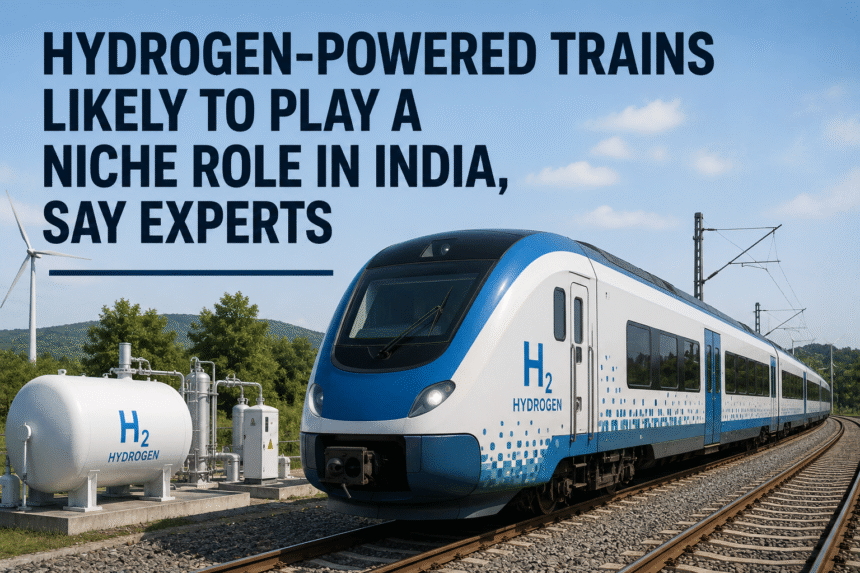
India’s first hydrogen-powered train marks an important step in the country’s transition towards cleaner transportation, but experts believe the technology is likely to remain confined to a limited number of routes rather than becoming a mainstream solution for Indian Railways. They point out that with almost the entire broad-gauge network already electrified, the scope for hydrogen-powered trains is relatively small.
According to experts, hydrogen-powered trains are best suited for non-electrified or difficult-to-electrify routes where extending overhead electric infrastructure may not be economically viable. They noted that Indian Railways has already made significant progress in electrification, reducing the need for alternative propulsion systems on most of its network.
While hydrogen fuel-cell technology offers a zero-emission alternative to diesel locomotives, its widespread adoption will depend on the availability of affordable green hydrogen and the development of supporting infrastructure, including production, storage and refuelling facilities. At present, the high cost of hydrogen production remains one of the biggest challenges to large-scale deployment.
Experts, however, said the introduction of hydrogen-powered trains is significant for India’s energy transition as it reduces dependence on fossil fuels and supports the country’s climate commitments. They added that the technology could prove useful on select regional and heritage routes where electrification is either difficult or financially unviable.
Prime Minister Narendra Modi on Friday flagged off India’s first hydrogen-powered train on the Jind–Sonipat section in Haryana. The train, powered by a 1,200-kW hydrogen fuel-cell propulsion system, is designed to carry around 2,600 passengers and will operate at a maximum speed of 75 kmph.