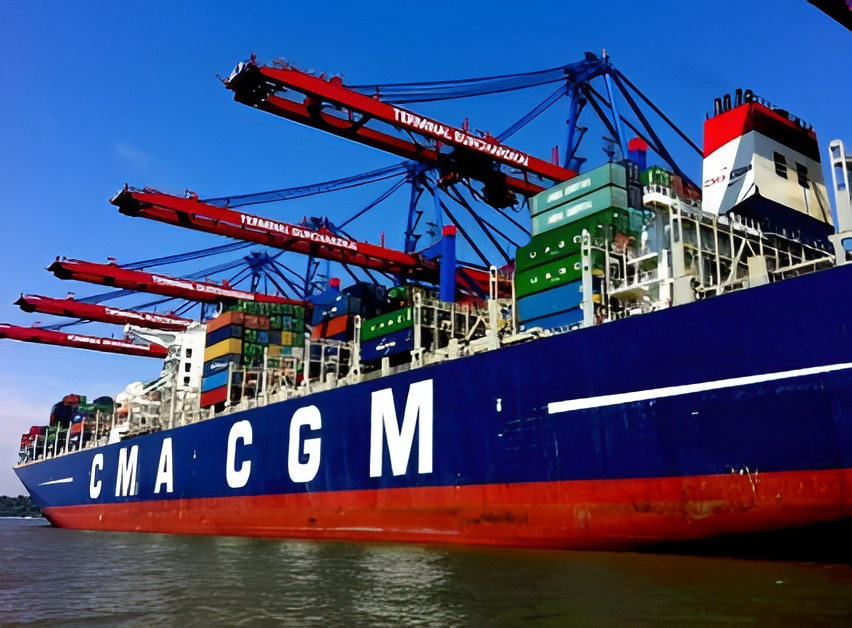
CMA CGM has announced the introduction of a Port Congestion Surcharge (PCS) for cargo operations at the Port of Abidjan in Côte d’Ivoire, citing increasing congestion, vessel delays, and operational disruptions affecting container movement and port efficiency.
The surcharge will apply to shipments handled through the Port of Abidjan as the global shipping major responds to mounting logistical bottlenecks and rising turnaround times at one of West Africa’s busiest maritime gateways.
According to the company, persistent congestion at the port has significantly impacted vessel schedules, container handling operations, and supply chain reliability. The surcharge has been introduced to partially offset additional operational costs arising from prolonged waiting times and terminal inefficiencies.
Industry reports indicate that the Port of Abidjan has been experiencing rising cargo volumes, yard congestion, berthing delays, and increased pressure on container handling infrastructure. The port serves as a major trade and transshipment hub for West Africa, supporting cargo movement not only for Côte d’Ivoire but also for several neighbouring landlocked countries.
Shipping analysts noted that congestion-related surcharges have become increasingly common across global ports as shipping lines attempt to manage operational disruptions caused by infrastructure limitations, geopolitical instability, rising trade volumes, and supply chain imbalances.
The Port Congestion Surcharge introduced by CMA CGM will reportedly apply to both import and export cargo categories, depending on shipment type and destination routing. The revised charges are expected to impact logistics costs for shippers operating through the region.
Abidjan remains one of Africa’s most strategically important ports due to its location, regional connectivity, and role in supporting trade flows across West and Central Africa. The port handles a wide range of commodities including containers, agricultural exports, industrial goods, energy products, and consumer merchandise.
Industry experts believe the congestion situation highlights the growing need for port modernisation, capacity expansion, digital logistics systems, and improved hinterland connectivity across African maritime infrastructure networks. Rising container traffic and larger vessel deployments are placing increasing pressure on existing port ecosystems globally.
Global shipping companies have been actively implementing congestion surcharges, peak season adjustments, and operational recovery fees in regions facing persistent delays and supply chain disruptions. Such measures are often introduced to compensate for higher fuel consumption, vessel idle time, scheduling disruptions, and operational inefficiencies.
The maritime logistics sector continues to face challenges linked to fluctuating global trade patterns, port capacity constraints, Red Sea disruptions, container imbalances, and changing freight demand across international shipping routes. Shipping lines are increasingly focusing on network optimisation and operational resilience to maintain schedule reliability.
Industry observers noted that long-term improvements at the Port of Abidjan could require expanded terminal infrastructure, automation, dredging upgrades, cargo evacuation improvements, and stronger multimodal logistics integration to support future trade growth and reduce congestion risks.
As global trade volumes continue to recover and African economies expand, ports such as Abidjan are expected to play an increasingly important role in international supply chains, regional trade integration, and maritime connectivity across the continent.