The Centre has signed reform-linked Memoranda of Understanding (MoUs) with the governments of Bihar and Manipur under Jal Jeevan Mission (JJM) 2.0, aimed at strengthening sustainable and community-driven rural drinking water supply systems in the two states.
The agreements seek to promote a Gram Panchayat-led, service-oriented and community-centred model of rural water governance, ensuring regular access to safe drinking water of adequate quantity and prescribed quality in rural areas. The focus under JJM 2.0 is shifting from infrastructure creation to long-term service delivery, sustainability and efficient operation of water supply systems.
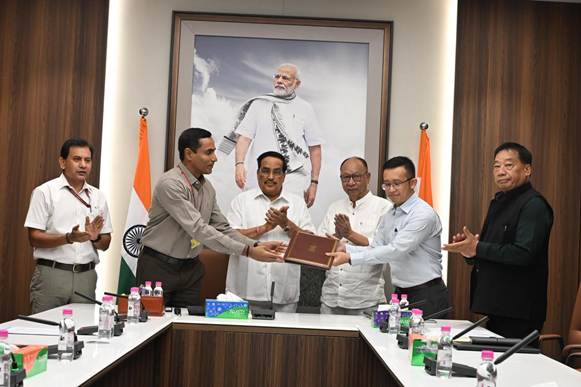
The MoU with Manipur was signed in the presence of Union Jal Shakti Minister C. R. Patil and Manipur Chief Minister N. Biren Singh. The agreement was exchanged between officials of the National Jal Jeevan Mission and the Manipur government.
Later in the day, a similar agreement was signed with Bihar in the presence of C.R. Patil, Union Minister of State for Jal Shakti Raj Bhushan Choudhary and Bihar Public Health Engineering Minister Sanjay Kumar Singh.
Addressing the signing ceremonies, Patil said that while the original Jal Jeevan Mission significantly expanded rural tap water coverage across the country, JJM 2.0 will focus on sustaining the assets created under the programme. Key priorities include ensuring the functionality of household tap connections, maintaining water quality, strengthening source sustainability, improving operation and maintenance systems, enhancing community ownership and establishing robust monitoring mechanisms.
The minister also stressed the importance of water conservation, rainwater harvesting, groundwater recharge and protection of catchment areas. He called for greater participation by Gram Panchayats, district and state water missions, and local communities in managing rural water infrastructure.
Referring to Bihar, Patil noted that the state has achieved nearly 96 per cent rural tap water coverage and said the next phase should concentrate on ensuring the long-term sustainability of the ‘Har Ghar Jal’ network and strengthening maintenance systems.
For Manipur, he expressed confidence that the state would complete the remaining household tap water connections and move towards universal rural coverage under the mission.
The reform-linked agreements form part of the Centre’s broader strategy under Jal Jeevan Mission 2.0 to strengthen rural drinking water governance through policy reforms, community participation, sustainable funding mechanisms, digital monitoring frameworks and long-term service delivery models.