The Cabinet Committee on Economic Affairs (CCEA), chaired by Prime Minister Narendra Modi, has approved two railway multitracking projects with a total estimated investment of ₹3,907 crore. The projects, spanning four districts across Odisha and Jharkhand, are aimed at expanding rail capacity, improving operational efficiency and facilitating faster movement of passengers and freight.
The approved projects include the doubling of the Paradeep–Haridaspur rail line in Odisha and the construction of a fourth rail line between Rajkharsawan and Dangoaposi in Jharkhand and Odisha. Together, the projects will add around 145 km to the existing railway network and address capacity constraints on two important freight corridors.
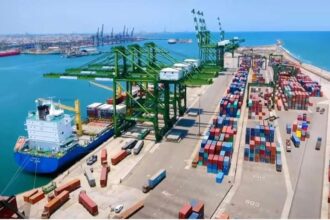
The Paradeep–Haridaspur doubling project is expected to strengthen connectivity to Paradeep Port, one of India’s major maritime gateways, while supporting the transportation of coal, iron ore, steel, fertilisers, cement and other bulk commodities. The Rajkharsawan–Dangoaposi fourth line will enhance connectivity in the mineral-rich regions of eastern India and improve rail operations on one of the country’s busiest freight routes.
According to the government, the projects are aligned with the PM Gati Shakti National Master Plan and are designed to provide seamless multimodal connectivity. Once completed, they will improve line capacity, reduce congestion, enhance service reliability and enable faster evacuation of freight from mining and industrial clusters.
The projects are targeted for completion by 2030–31 and are expected to generate approximately 49 lakh human-days of direct employment during the construction phase. Besides supporting industrial growth, the enhanced railway infrastructure will improve connectivity for local communities and contribute to the socio-economic development of the region.