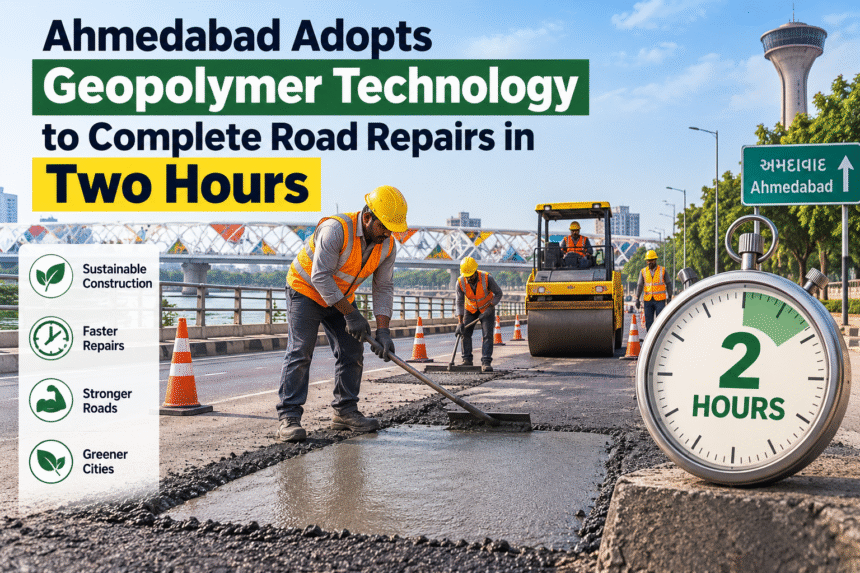
Ahmedabad is set to use geopolymer technology for repairing potholes and damaged sections of concrete roads, with the new method expected to allow repaired stretches to reopen to traffic in around two hours. The Ahmedabad Municipal Corporation (AMC) has adopted the technology as an alternative approach to conventional concrete road repair, which can require longer closures and curing periods.
Jainik Vakil, Chairman of the AMC Road and Building Committee, said the technology can repair a damaged road section within two hours to a strength level comparable to that of a standard road under normal conditions. The quicker turnaround could reduce the disruption caused by barricading roads for extended periods during repair work.
A key difference in the new method is that the entire concrete panel does not have to be broken and removed when the damage is localised. Only the affected portion can be repaired depending on the extent of damage. This can reduce the amount of material, labour and time required for pothole and localised road repairs.
The geopolymer material uses clinker-free components, industrial by-products and specialised mineral-based binders. Water is added to prepare the material before it is placed in the damaged section. The material develops strength rapidly, allowing the repaired road to be reopened in approximately two hours.
The technology is primarily intended for concrete roads, although it can also be used on selected bituminous road stretches where site conditions are suitable. AMC officials see it as a potentially more durable alternative to conventional cold and hot mixes, which are often used for temporary repairs on damaged concrete roads.
Another advantage is that the repaired section does not require conventional water curing. This eliminates the need for several days of curing and can reduce water consumption as well as the labour and supervision required during the process. The method can also be used for repairs during the monsoon when site and weather conditions are suitable.
The rapid-setting material is reported to achieve a strength of around 24 MPa within two hours, which supports the quick reopening of repaired road sections. This feature could be particularly useful on roads carrying heavy traffic, where prolonged closures can lead to diversions and congestion.
AMC will maintain a two-year Defect Liability Period (DLP) for the repair work. Any defects arising in the repaired sections during this period will have to be addressed in accordance with the prescribed conditions.
The technology has already been used for road repairs in Mumbai, including on the Eastern and Western Express Highways. Ahmedabad’s adoption of the method is aimed at providing a faster repair option for concrete roads while reducing traffic disruption, water use and the resources required for conventional repair methods.
For a city dealing with recurring potholes and road damage, the technology could provide a quicker maintenance response by allowing individual damaged portions to be treated without dismantling complete concrete panels. Its effectiveness and durability in Ahmedabad will determine how widely the method is subsequently deployed across the city’s road network.