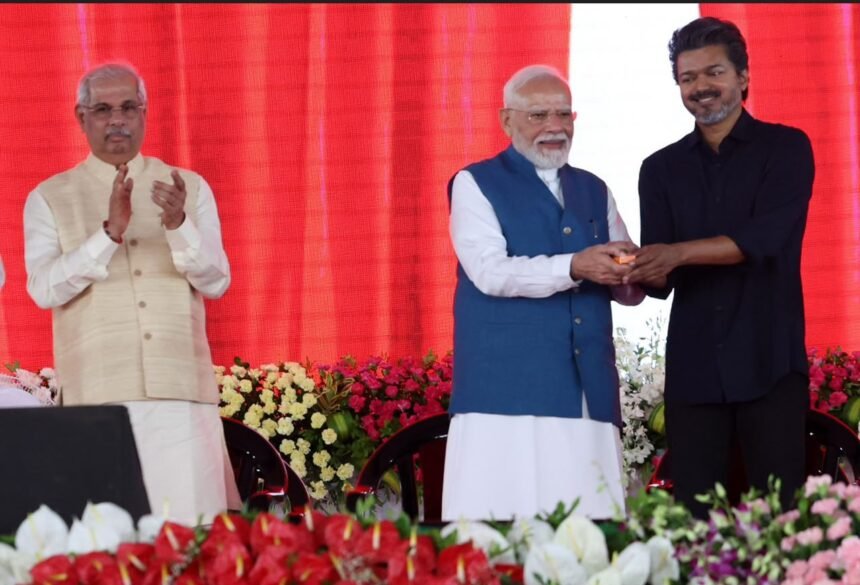
Prime Minister Narendra Modi inaugurated Coal Berth-3 at Kamarajar Port in Tamil Nadu and laid the foundation stone for the modernisation of General Cargo Berth-1 (GCB-1), taking the combined value of the two projects to ₹482 crore. The projects are aimed at improving coal-handling capacity, strengthening fuel supply to thermal power stations and enhancing cargo operations at the port.
Coal Berth-3 has been developed at a cost of ₹261.05 crore and is designed to handle up to 9 million tonnes of coal annually. The facility will operate on a captive basis for the Tamil Nadu Power Generation Corporation Limited (TNPGCL), serving the state utility’s fuel requirements. Its commissioning is expected to support the movement of coal to thermal power plants in North Chennai.
The berth can accommodate Capesize vessels with a draft of up to 18 metres, allowing larger dry-bulk carriers to call at the port. Its mechanised handling system comprises two ship unloaders, each with a capacity of 2,000 tonnes per hour, connected to a conveyor system capable of transporting 4,000 tonnes of coal per hour. The conveyor will facilitate direct coal movement to the North Chennai thermal power plants.
The second project involves upgrading, mechanising and operating General Cargo Berth-1 through a public-private partnership (PPP) model, at an estimated cost of ₹221 crore. The berth currently has a cargo-handling capacity of 3 million tonnes per annum. The proposed modernisation is intended to improve operational efficiency and increase the range of commodities that can be handled at the facility.
The GCB-1 upgrade is also expected to reduce vessel turnaround time by accelerating cargo loading and unloading. Greater mechanisation and private-sector participation are intended to improve berth productivity, strengthen logistics operations and enhance the port’s competitiveness in cargo handling.
Both projects form part of efforts to expand port infrastructure and improve maritime logistics in Tamil Nadu. Coal Berth-3 is particularly significant for the state’s power sector, as a dedicated facility with high-capacity unloading and conveyor systems can support the movement of fuel required for electricity generation.
The projects were included in the broader development programme unveiled during the Prime Minister’s October 11 visit to Chennai, which covered infrastructure investments worth more than ₹13,000 crore across metro rail, highways, railways, ports, petroleum and other sectors. At Kamarajar Port, the two initiatives focus on improving bulk cargo handling and modernising existing facilities to meet operational requirements.
The investment of ₹482 crore combines the creation of additional coal-handling infrastructure with the renewal of an existing general cargo berth. Together, the projects are intended to strengthen Kamarajar Port’s role in supporting industrial activity, energy supply and cargo movement along India’s eastern coastline.