


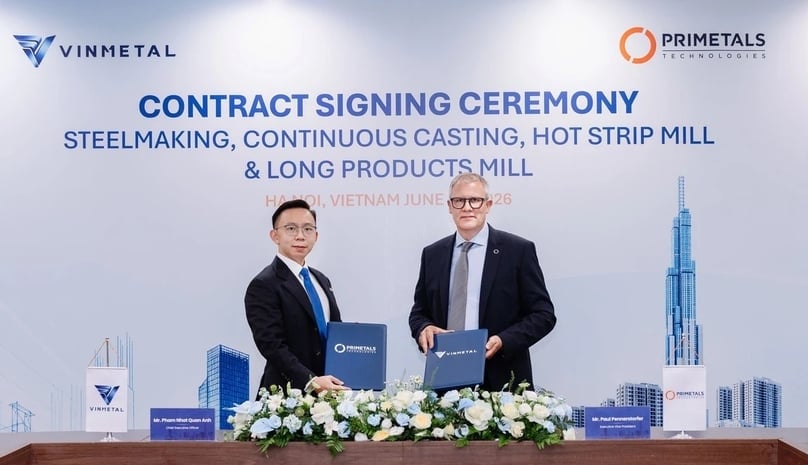
VinMetal, the steel subsidiary of Vietnamese conglomerate Vingroup, has awarded Primetals Technologies a major contract to supply the core steelmaking, continuous casting and rolling technologies for its upcoming integrated steel complex in Ha Tinh Province, central Vietnam.
Primetals Technologies, jointly owned by Mitsubishi Heavy Industries following the merger of Germany’s Siemens VAI and Japan’s Mitsubishi-Hitachi Metals Machinery, will deliver the plant’s primary steel production equipment under the agreement.
The technology package includes three 200-ton basic oxygen furnaces (BOFs), ladle furnace (LF) refining systems, RH vacuum degassing units, an eight-strand billet caster, two slab casters, high-speed wire rod and bar rolling mills, and a hot-rolled coil (HRC) production line. The integrated production setup will enable VinMetal to manufacture both long and flat steel products catering to infrastructure, manufacturing, automotive, energy and high-technology industries.
Alongside the downstream facilities, VinMetal has also completed the selection of key upstream technologies covering coke ovens, sintering plants, pelletizing units, blast furnaces and pig iron production. With these technology selections in place, the company has finalised the primary process design for the entire steel complex, from raw material processing through to finished steel production.
Construction of the Ha Tinh project is progressing on an accelerated schedule. The first phase, with an annual production capacity of six million tonnes of steel, is targeted to commence operations in early 2027. The second phase will expand the plant’s total production capacity to 20 million tonnes per annum, with commercial production planned to begin in 2029.
VinMetal said the integrated steel complex has been designed to achieve carbon emissions of around 1.8 tonnes of CO₂ per tonne of finished steel, significantly improving its environmental performance. The emissions target is intended to ensure compliance with evolving international regulations, including the European Union’s Carbon Border Adjustment Mechanism (CBAM) and global Environmental, Social and Governance (ESG) standards, while strengthening the competitiveness of the company’s steel products in international markets.