


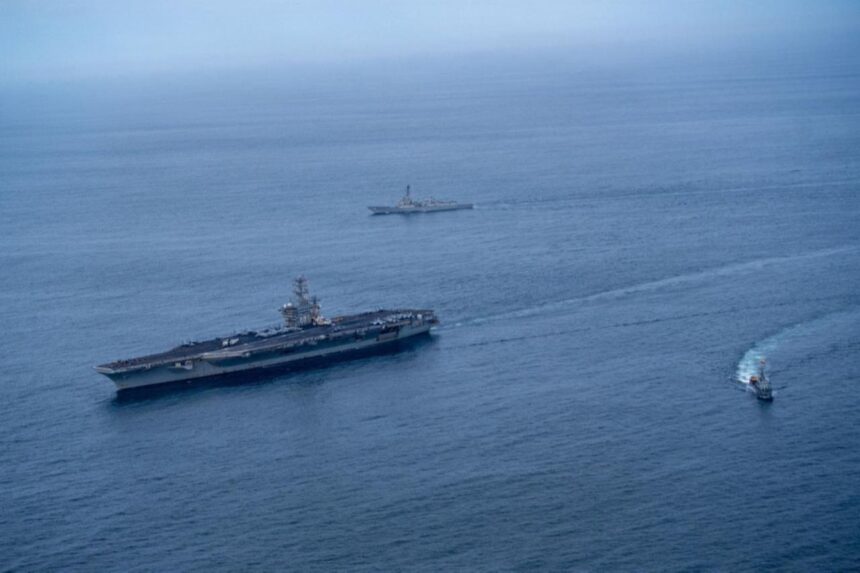
The United States has officially begun lifting its maritime blockade on Iran following the signing of an interim memorandum of understanding between the two countries, marking a significant step toward de-escalation after months of conflict and disruption to regional shipping.
The announcement came after the U.S. Central Command (CENTCOM) confirmed that all blockade enforcement operations against vessels travelling to and from Iranian ports had ceased. The move follows a diplomatic agreement reached between Washington and Tehran that provides a framework for restoring maritime trade and launching negotiations on broader issues.
Under the terms of the understanding, the United States will progressively remove its naval blockade and related restrictions, with the process expected to be completed within 30 days. In return, Iran has agreed to facilitate the safe passage of commercial vessels and restore normal shipping activity through the Strait of Hormuz.
The agreement also establishes a 60-day negotiation window during which both sides will work toward a comprehensive settlement covering outstanding issues, including sanctions, regional security, maritime operations, and aspects of Iran’s nuclear programme. The negotiation period may be extended if both parties agree.
The reopening of maritime routes is expected to provide relief to global shipping and energy markets, as the Strait of Hormuz remains one of the world’s most critical trade corridors, handling a substantial share of international oil and gas shipments. Industry observers believe the development could help stabilize freight movements and improve market confidence after months of uncertainty.
While the agreement has been welcomed as a breakthrough in reducing tensions, officials from both countries have emphasized that it represents an interim framework rather than a final settlement. The coming weeks of negotiations are expected to determine the long-term future of bilateral relations and regional stability.
The development marks one of the most significant diplomatic openings between the United States and Iran in recent years and has the potential to reshape maritime trade flows, energy markets, and security dynamics across the Gulf region.