


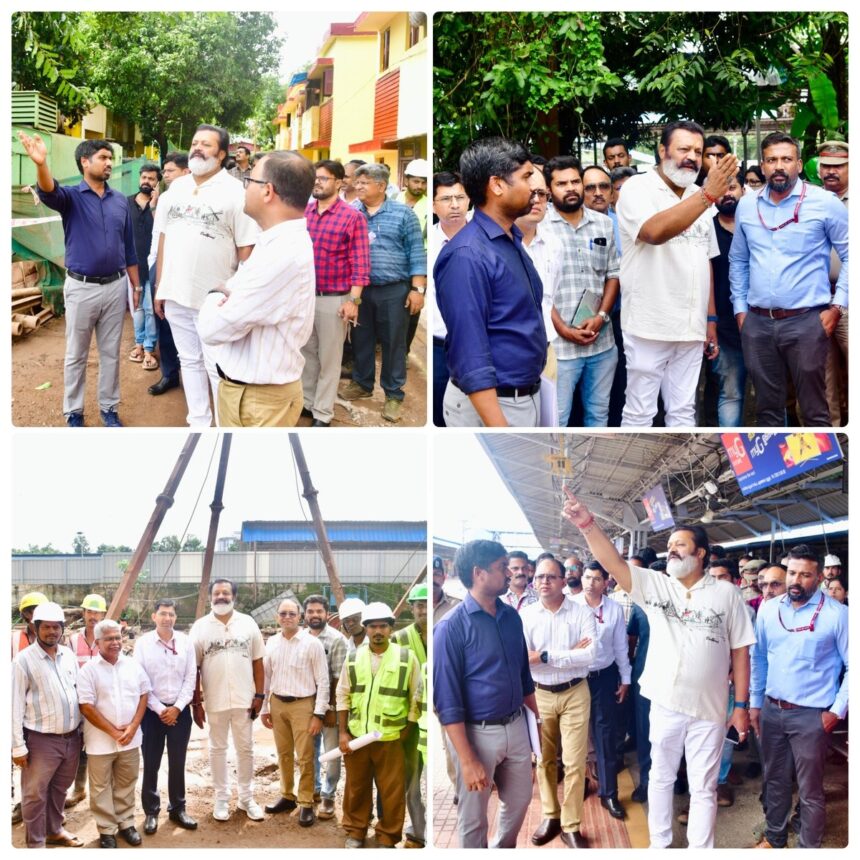
Union Minister of State Suresh Gopi reviewed the progress of the Thrissur Railway Station redevelopment project and directed officials to ensure close coordination among all stakeholders for the timely execution of the ambitious station modernisation programme. The review meeting was held at the Collectorate Conference Hall and was attended by officials from the Railways, district administration, Thrissur Corporation, and other concerned departments, along with public representatives.
During the meeting, officials assessed various components of the redevelopment project, including the phased execution of civil works, relocation of station offices and passenger facilities, traffic management plans, and other activities requiring inter-departmental coordination. Discussions focused on ensuring smooth implementation of the project while minimising inconvenience to passengers and the general public throughout the construction period.
Railway officials informed the minister that the redevelopment is being carried out in phases to provide modern passenger amenities, improved accessibility, enhanced circulation areas, upgraded station infrastructure, and better multimodal connectivity. The project is targeted for completion by 2028, transforming Thrissur Railway Station into a world-class transport hub under the Indian Railways’ station redevelopment programme.
Following the review meeting, Gopi visited the railway station to inspect the ongoing construction works and examined the proposed locations for shifting various station facilities during different phases of redevelopment. He also interacted with engineers, officials, and construction workers engaged in the project, appreciating their efforts and urging them to maintain the pace of execution while adhering to quality and safety standards.
The redevelopment of Thrissur Railway Station is being undertaken at an estimated cost of ₹344.99 crore under the Engineering, Procurement and Construction (EPC) model. Once completed, the project is expected to significantly enhance passenger experience, improve operational efficiency, and strengthen multimodal transport integration, supporting the region’s growing transportation needs and overall urban infrastructure development.