


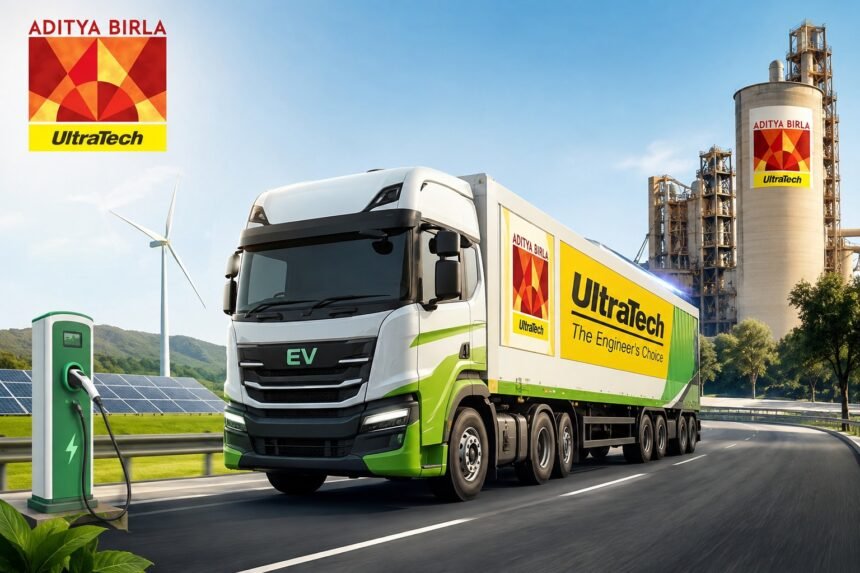
UltraTech Cement Limited plans to increase the number of electric trucks in its logistics operations to more than 600 by December 2026. The fleet will be used to transport around 5 million MT of clinker and other key materials annually across seven states.
The Aditya Birla Group company has signed service contracts with EV prime mover manufacturers Tata Motors, Ashok Leyland, IPLTech, Energy in Motion and Sany, along with their subsidiaries and other third-party logistics providers, for deploying the electric trucks.
The 600-plus electric trucks will operate across Gujarat, Uttar Pradesh, Madhya Pradesh, Rajasthan, Chhattisgarh, Maharashtra and Odisha. UltraTech estimates that once the fleet is fully operational, it could help reduce net annual CO₂ emissions by more than 1,17,000 tonnes. The electric fleet is also expected to displace diesel consumption equivalent to around 39 million litres every year.
K C Jhanwar, Managing Director, UltraTech Cement Limited, said, “UltraTech is expanding sustainability beyond its plants by adopting greener logistics solutions. This large-scale transition to green logistics underscores our focus on decarbonising every link of our value chain and supports our commitment to achieving Net Zero.”
UltraTech has been using alternative-fuel and electric vehicles for transportation for several years. The company introduced CNG trucks in 2021 and electric trucks in 2024. It currently operates more than 850 trucks under its green logistics operations, including CNG and electric vehicles.
The company has also been an early adopter of heavy-duty electric trucks for long-haul transportation of clinker and other materials in the cement sector.
UltraTech has a grey cement capacity of over 200 MTPA in India and operates a complex logistics network covering the movement of materials across its manufacturing operations. Its electrification strategy extends from mine-to-plant transportation to the inter-plant movement of clinker and other key materials.