


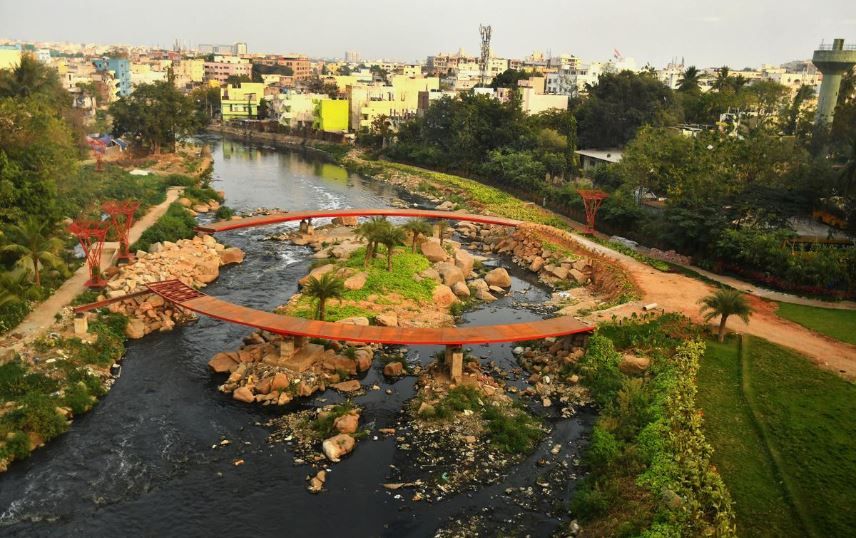
The Telangana government has announced the launch of an ambitious Musi River rejuvenation initiative aimed at restoring the ecological health of the river while transforming its banks into a vibrant urban and environmental corridor. The project represents a major step toward sustainable river management and urban revitalization in Hyderabad.
Planned as a comprehensive urban riverfront development programme, the initiative will focus on improving water quality, strengthening flood management systems, and creating public spaces along the river. Authorities aim to transform the Musi corridor into a cleaner, environmentally sustainable and economically vibrant urban zone.
The first phase of the project will focus on the upstream sections of the river, particularly the stretches connecting Osman Sagar to Bapu Ghat (approximately 11 km) and Himayat Sagar to Bapu Ghat (around 9 km). These stretches are considered critical for improving water flow, preventing pollution inflows, and restoring the natural ecosystem of the river.
A key highlight of the initiative is the development of Gandhi Sarovar, a large public cultural and ecological destination near Bapu Ghat. Spread across roughly 200 acres, the site will be designed as a world-class experiential centre dedicated to the life and philosophy of Mahatma Gandhi. The development will include museums, cultural spaces, public plazas, meditation areas, and landscaped riverfront zones aimed at promoting heritage, sustainability, and tourism.
Officials have divided the 55-kilometre Musi river stretch passing through Hyderabad into multiple development zones so that restoration and infrastructure development can be implemented in phases. The upstream segments are expected to receive priority attention as part of the initial stage of the programme.
The project is being implemented through the Musi Riverfront Development Corporation Limited (MRDCL), which has completed key planning and hydrological assessments required for the rejuvenation effort. The initiative will include river cleaning systems, improved drainage management, flood mitigation infrastructure, ecological restoration measures, and public recreational facilities along the river corridor.
International best practices are also being studied for the project’s design. Urban planners are drawing inspiration from successful riverfront transformation initiatives in cities around the world to ensure that the Musi restoration integrates environmental protection with urban development.
In addition to ecological restoration, the project is expected to create significant economic opportunities by promoting tourism, cultural activities, and urban infrastructure development along the riverfront. Public amenities such as pedestrian promenades, cycling tracks, green parks, and cultural spaces are planned to enhance urban livability.
The project also requires strategic land acquisition and urban redevelopment in select areas along the river corridor. Authorities have begun preliminary steps to identify land parcels and structures that may be required for redevelopment as part of the riverfront transformation plan.
Financial support for the project is expected to be mobilized through a combination of government funding and international development financing, with multilateral institutions showing interest in supporting sustainable urban infrastructure initiatives.
Once completed, the Musi rejuvenation initiative is expected to significantly improve Hyderabad’s environmental resilience, reduce flood risks, enhance public spaces, and create a model for integrated riverfront development in India.