


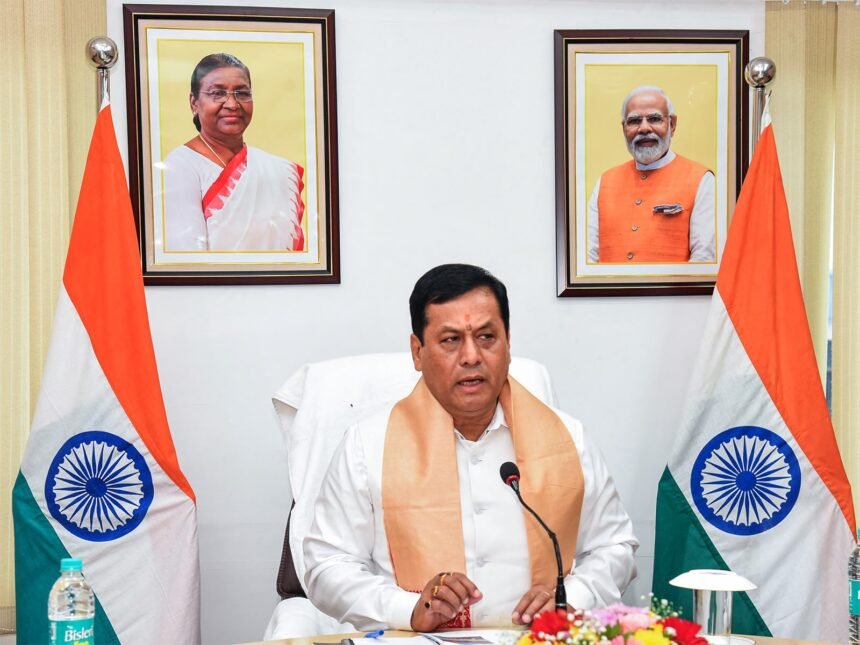
Union Minister for Ports, Shipping and Waterways Sarbananda Sonowal has invited global shipbuilders, shipping lines and financial institutions to invest in India’s shipbuilding sector, highlighting an estimated $10 billion investment opportunity across five proposed greenfield coastal shipbuilding clusters. The government aims to position India among the world’s top 10 shipbuilding nations by 2030 and the top five by 2047.
Sonowal made the announcement at the India Shipbuilding Investment Conclave 2026, organised by the Ministry of Ports, Shipping and Waterways in New Delhi on November 16. He also launched ‘Naukosh’, a digital portal for the shipbuilding and ship repair industry. The conclave also saw Cochin Shipyard Limited and Netherlands-based Damen Shipyards Group sign a memorandum of understanding to collaborate on future shipbuilding projects.
Highlighting the demand outlook, Sonowal said India’s identified domestic requirement exceeds 400 vessels, representing a potential investment opportunity of nearly $24 billion. The country’s active shipbuilding order pipeline comprises more than 150 vessels valued at over $1.7 billion, with export orders accounting for more than 80% of the total value.
The proposed investment programme will focus on five greenfield shipbuilding clusters at Dugarajapatnam in Andhra Pradesh, Kuchhadi in Gujarat, Dighi in Maharashtra, Kendrapada in Odisha and Thoothukudi in Tamil Nadu. Central and state government teams presented investors with details of land availability, policy support and the proposed arrangements for shipyards, component manufacturers and allied marine businesses.
The conclave brought together executives from 30 international shipyards, along with shipping companies, equipment manufacturers, banks, investors, diplomatic missions and Indian industry representatives. Participants included South Korea’s HD KSOE, Samsung Heavy Industries and Hanwha Ocean, as well as Fincantieri, Meyer Werft, Damen, Royal IHC, Everllence, Mitsui Engines, Wärtsilä, Kongsberg, Drydocks World Dubai, Maersk, MSC, CMA CGM, MOL and DP World.
The participation of South Korean shipbuilders builds on the VOYAGES partnership, or Vision for Operation of Yard Assisted Growth with Efficiency and Scale, signed by Prime Minister Narendra Modi and South Korean President Lee Jae Myung in April 2026. The initiative aims to bring South Korea’s shipbuilding expertise together with India’s Maritime Amrit Kaal Vision 2047.
Naukosh, developed by the Directorate General of Maritime Administration under the ministry, is designed to bring industry information, policies, regulatory guidance and investment opportunities onto a single digital platform. It will serve shipyards, ship repair facilities, equipment manufacturers, design agencies, classification societies, research and training institutions, financiers, insurers and regulatory bodies.
The portal includes an industry directory, shipyard capability data, a collaboration hub, finance and insurance information, a technical library, an innovation centre, training and certification facilities, and regulatory guidance. Its public dashboard will also provide information on shipyard capacities, vessels delivered and orders in the pipeline.
The conclave included a Global Maritime Leaders’ Open House, where industry representatives shared feedback on policy and long-term investment plans with government officials. This was followed by meetings between international delegations, state cluster teams, central ministries and financial institutions. Ten international delegations were scheduled to visit the proposed cluster locations on November 17.
The investment initiative builds on the shipbuilding financial package approved by the government last year. Sonowal said the participation of international industry leaders reflected growing confidence in India as a shipbuilding destination, adding that the government’s priority was to translate investment discussions into projects on the ground.
Vijay Kumar, Secretary, Ministry of Ports, Shipping and Waterways, described the discussions as focused and practical. He said investors would have designated points of contact across the cluster special purpose vehicles, state governments and the ministry, with follow-up planned on the engagements.