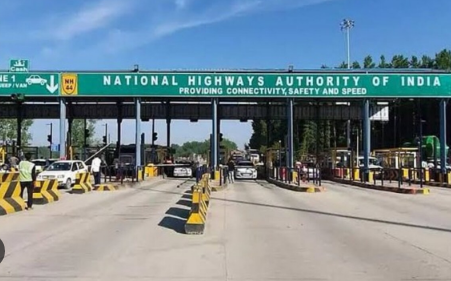
The National Highway Authority of India (NHAI) is increasingly relying on the Hybrid Annuity Model (HAM) for most of its highway projects, signalling a decisive shift away from the previously dominant Build-Operate-Transfer (BOT) model.
Of the 52 projects worth ₹1.15 lakh crore invited for bids as of November 14 this fiscal year, 29 projects valued at ₹76,150 crore are set to be awarded under HAM, while only four projects worth ₹16,542 crore are being taken up through the BOT mode. Another 19 projects involving ₹18,755 crore are earmarked for execution via the EPC route, NHAI data showed.
In 2024–25, even as the government sought to revive the BOT model, it accounted for just about 10% of total national highway awards. While this represented an improvement over 2023–24, when no BOT projects were awarded, it still marked the highest level of BOT activity in the past five years.
Why HAM succeeds where BOT fails?
The shift reflects insights gained from BOT’s challenging decade. Jagannarayan Padmanabhan, Senior Director and Global Head of Consulting at Crisil Intelligence, notes that BOT’s decline was primarily due to flawed fundamentals. Padmanabhan noted that the primary reason for the decline in BOT projects has been improper risk allocation and the inflexibility to modify contracts after they are awarded, although certain BOT projects with strong traffic have continued to succeed.
Under the HAM model, risk is allocated differently: NHAI covers 40% of the construction costs upfront, while developers finance the remainder and recover their investment through annuity payments during the operational phase.
“In HAM contracts, the Authority assumes full responsibility for traffic and revenue risks and also provides an upfront contribution of 40% toward project development, making these contracts more attractive to private investors,” Padmanabhan explained. He also noted that HAM projects have also discovered significant traction among EPC players.
This model has attracted private players back into highway development after BOT projects faltered in the 2010s due to uncertainties over toll revenue and delays in land acquisition. T.R. Rao, Director – Infrastructure at PNC Infratech, stated during the company’s Q4 FY24 investor call that while NHAI prefers BOT projects for self-sustaining revenue, it defaults to the HAM model unless the standalone viability of a BOT project can be demonstrated with limited government grants, as BOT projects require adequate toll income.