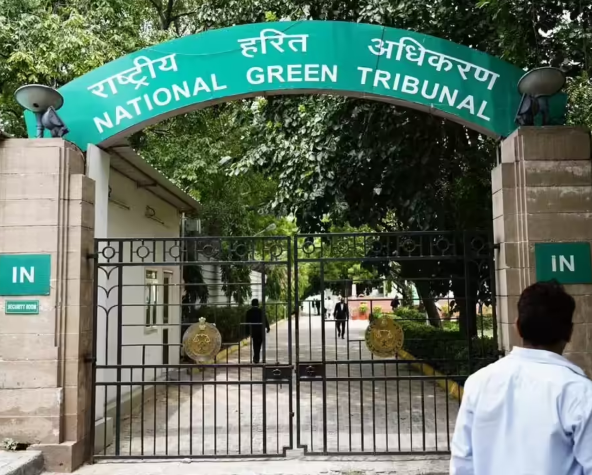
The National Green Tribunal (NGT) has revealed that an elevated road constructed by the National Highways Authority of India (NHAI) in Delhi encroaches upon a protected waterbody, raising concerns over environmental compliance and wetland conservation.
In a recent order, the tribunal highlighted that the elevated highway segment was built over an area that was designated as a waterbody under environmental protection norms. Such construction, the NGT noted, could obstruct natural drainage patterns, affect water retention capacity and degrade the ecological integrity of the wetland ecosystem.
The NGT’s observations came during the hearing of a petition alleging violation of environmental safeguards and regulatory clearances in the planning and execution of the road project. The tribunal emphasised that protection of wetlands and waterbodies is essential for urban ecological balance, particularly in a densely populated city like Delhi where such features play an important role in groundwater recharge, flood mitigation and biodiversity preservation.
As part of its order, the tribunal has sought detailed responses from relevant authorities on whether statutory environmental clearances were obtained, and if due process was followed during land acquisition and construction. The NGT has asked for site assessments and expert evaluations to be submitted in subsequent hearings to determine the extent of environmental impact and whether restoration or remedial actions are needed.
Environmental advocates welcomed the tribunal’s scrutiny, noting that urban expansion and infrastructure development often place pressure on waterbodies and green spaces if adequate safeguards are not enforced. They underscored that sustained monitoring and strict compliance with environmental regulations are critical to ensuring that infrastructure growth does not come at the expense of natural resources.
Officials from the road authority have indicated their willingness to cooperate with the tribunal’s process and provide required documentation. They noted that design and construction decisions were made based on available approvals, and have offered to share technical details of project planning and execution.
The NGT’s intervention is expected to prompt a review of infrastructure designs in relation to protected waterbodies in the city, and could lead to broader discussions on balancing urban development with ecological preservation. The tribunal has reserved further orders after taking into account the submissions and expert assessments.