


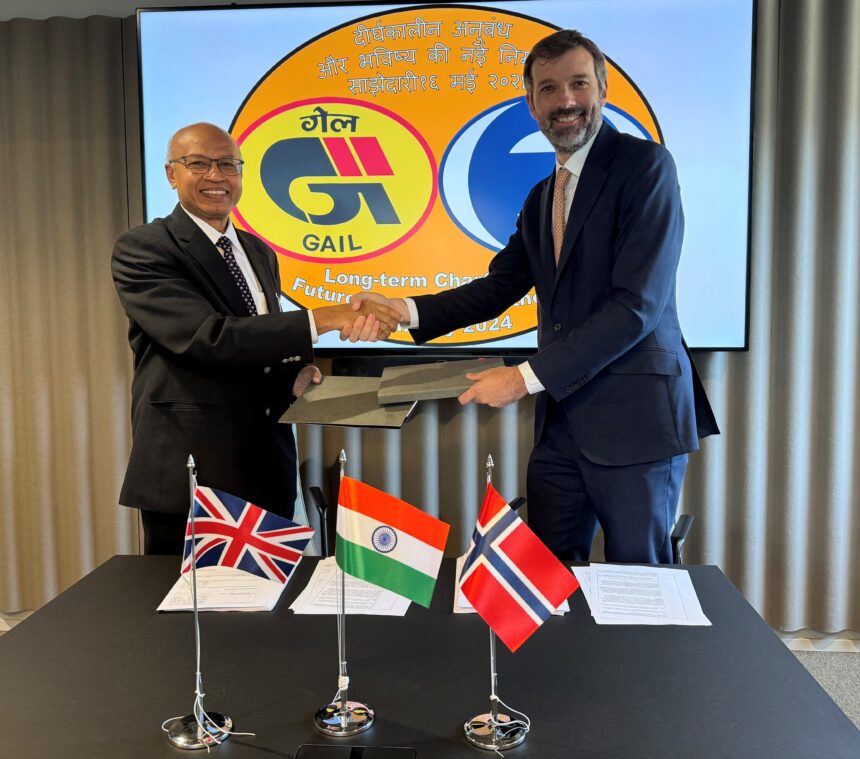
Mitsui O.S.K. Lines Ltd. (MOL) and India’s state-owned energy company GAIL (India) Limited have signed a long-term charter agreement for the liquefied natural gas (LNG) carrier GAIL Bhuwan. Under the pact, MOL will provide maritime transport services for LNG shipments over an extended period, reinforcing India’s growing LNG import infrastructure and bolstering energy security.
The agreement marks a significant step in strengthening logistical support for India’s expanding gas market. GAIL Bhuwan, a newly built LNG carrier, will be deployed to transport LNG to key regasification terminals in India, supporting the nation’s increasing demand for cleaner-burning fuel across industries, power generation and transportation.
Under the charter terms, MOL will manage vessel operations, crewing and technical maintenance, ensuring compliance with stringent safety and environmental standards. The long-term nature of the contract reflects both companies’ commitment to steady and efficient LNG supply chains, which are central to India’s shift toward a gas-based energy economy.
India has been diversifying its energy mix and ramping up natural gas usage as part of broader policy goals to reduce carbon emissions and increase energy security. LNG imports play a pivotal role in meeting domestic demand, particularly as pipeline connectivity and infrastructure across the country expand. The new charter agreement is expected to enhance reliability in LNG deliveries and provide GAIL with assured shipping capacity over the contract period.
Representatives from both firms highlighted that the partnership leverages MOL’s extensive experience in LNG shipping and GAIL’s expanding presence in the Indian gas market. This collaboration is expected to support India’s long-term strategic objectives, including scaling up natural gas usage in industry and power sectors, and aligning with global trends toward cleaner fuels.
The deal also underscores rising international collaboration in energy logistics and the role of modern tanker fleets in facilitating secure fuel flows across regions.