


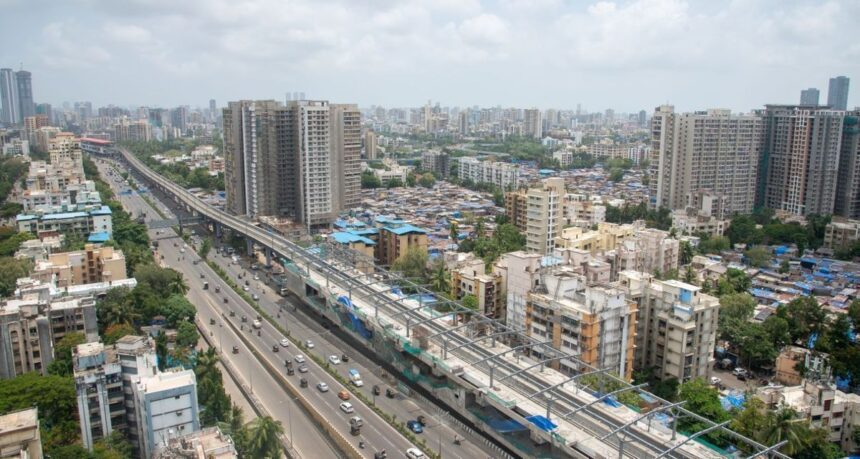
The Maharashtra government has significantly expanded the planning jurisdiction of the Mumbai Metropolitan Region Development Authority (MMRDA) by handing over planning and development control of key growth corridors including Karjat, Alibaug, and Bhiwandi as part of a major Mumbai Metropolitan Region (MMR) expansion strategy.
The move is aimed at accelerating integrated urbanisation, infrastructure planning, industrial development, and transport connectivity across the wider MMR region while reducing pressure on Mumbai’s saturated urban core. The expanded jurisdiction is expected to support long-term regional planning linked to upcoming transport mega projects, logistics hubs, industrial corridors, and new urban clusters.
According to state government approvals, MMRDA will now oversee planning authority responsibilities in several strategically important areas including Karjat, Khalapur, Pen, Alibaug, Bhiwandi, and adjoining development zones. Officials stated that the integration is intended to ensure coordinated infrastructure development and streamline execution of future mobility and urban expansion projects.
The expansion comes amid rapid infrastructure transformation underway across the Mumbai Metropolitan Region. Mega projects such as the Mumbai Trans Harbour Link (MTHL), Navi Mumbai International Airport, Mumbai–Ahmedabad Bullet Train, Virar–Alibaug Multimodal Corridor, Metro rail expansion, and new logistics corridors are already reshaping regional growth patterns.
Officials believe extending MMRDA’s control into Karjat and Alibaug will help create new residential, tourism, industrial, and logistics hubs linked to the emerging infrastructure ecosystem. Karjat has increasingly been viewed as a future affordable housing and township destination due to improving rail and road connectivity, while Alibaug is emerging as a premium tourism and second-home market supported by coastal infrastructure upgrades.
Bhiwandi, meanwhile, remains one of India’s largest warehousing and logistics clusters due to its proximity to Mumbai, JNPT Port, the Delhi–Mumbai Industrial Corridor (DMIC), and major highway networks. Authorities expect MMRDA-led planning integration to further strengthen Bhiwandi’s role as a logistics and industrial hub for western India.
The state government has increasingly focused on decentralising economic activity away from Mumbai city by promoting polycentric urban development across the wider metropolitan region. Planning experts note that integrated governance under MMRDA could improve land-use coordination, transit-oriented development, environmental planning, and infrastructure financing across emerging urban zones.
The MMRDA expansion is also expected to support execution of large-scale transport projects currently planned or under development in the region. These include suburban rail upgrades, new expressways, multimodal corridors, water transport systems, metro connectivity extensions, and industrial access roads aimed at improving regional mobility.
Urban development analysts believe the decision could have significant long-term implications for real estate growth, industrial investment, infrastructure financing, and regional economic integration across the Mumbai Metropolitan Region. The expanded planning framework is expected to enable better coordination between transport infrastructure, housing development, industrial zones, and environmental management in rapidly urbanising areas.
The Mumbai Metropolitan Region is currently among India’s largest urban economic clusters and contributes a substantial share of Maharashtra’s industrial output, logistics activity, financial services, and infrastructure investment. Authorities expect the latest expansion to strengthen MMR’s position as a globally competitive metropolitan growth region over the coming decades.