The Maharashtra Cabinet has approved a new land policy facilitating the planned development of a third Mumbai urban growth zone encompassing approximately 200 square kilometres near the Atal Setu area. The move is aimed at expanding the metropolitan region’s urban footprint and unlocking land resources for infrastructure, housing, industry, and allied economic activity.
Under the approved policy, specific land parcels around the Atal Setu corridor will be earmarked for urban development in a structured and phased manner. Government officials said the initiative is expected to provide a comprehensive framework for land acquisition, zoning, and coordinated investment, while ensuring orderly urban growth in one of the state’s most strategically located regions.
The new policy will enable the Maharashtra government to offer land on long-term leases or through transparent allocation mechanisms to developers, investors and public agencies involved in key infrastructure and real estate projects. The policy framework is expected to address regulatory clarity, streamline conversion processes, and promote land assemblage for public-private development collaboration.
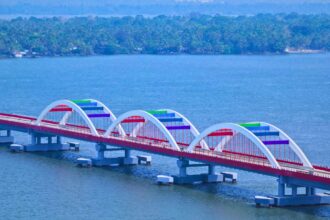
The area identified for the third Mumbai development lies in proximity to the Atal Setu (Navi Mumbai Sewri–Nhava Sheva Bridge), a major infrastructure project that has enhanced connectivity between Mumbai and Navi Mumbai. The region’s strategic location, with improved access to transport corridors, ports, and economic centres, makes it attractive for mixed-use urban expansion, logistics facilities, industrial nodes, and residential clusters.
Officials said that the policy approval follows comprehensive assessments of land availability, urbanisation patterns, and future infrastructure needs. By formalising the land use framework, the government aims to avoid ad hoc development and instead steer private investment toward planned growth that aligns with broader regional planning objectives.
The land policy is expected to catalyse economic activity by unlocking development potential for housing, commercial real estate, logistics parks, and industrial estates, while also supporting broader goals such as job creation and enhanced service delivery for residents. It could also accelerate project planning and execution by offering investors a predictable policy environment.
The third Mumbai development initiative is part of the state’s long-term vision for balanced metro region expansion, complementing existing urbanisation zones and future mass transit corridors. The policy will now guide subsequent master planning, regulatory approvals, and implementation strategies for the identified 200 sq km area.