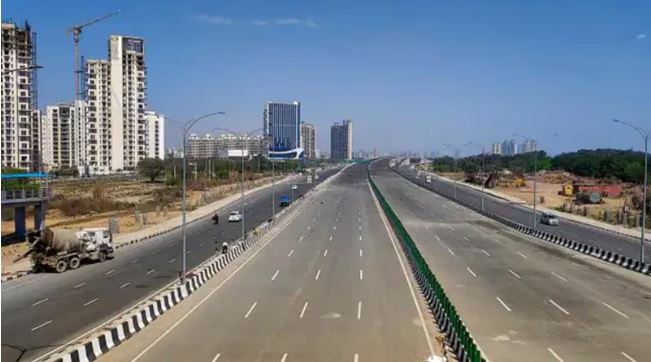
India’s ambitious highway development drive under the Bharatmala Pariyojana has made substantial headway, with more than 21,700 km of roads constructed across the country as of December 2025, according to information shared in Parliament.
Approved in 2017, the Bharatmala Pariyojana set out to develop a total highway network of about 34,800 km to strengthen national connectivity and lower logistics costs. Under Phase I of the programme, projects spanning 26,425 km have been awarded, out of which 21,783 km have already been completed, reflecting strong physical progress on the ground.
The government has incurred cumulative expenditure of approximately ₹4.93 lakh crore on the programme till February 2025. During the period from 2019 to 2025, a total of 236 projects covering 13,178 km were inaugurated across various states.
The programme is now moving into a consolidation phase, with fresh project sanctions under Bharatmala discontinued. New highway developments are being approved at the corridor level under the National Highways (Original) framework, subject to clearance by the competent authority.
Bharatmala places major emphasis on the creation of around 26,000 km of Economic Corridors, which, along with the Golden Quadrilateral and the North–South and East–West corridors, are expected to carry the bulk of the country’s road-based freight traffic. To strengthen these high-capacity routes, about 8,000 km of inter-corridors and nearly 7,500 km of feeder routes have also been identified.
Urban decongestion is another key focus area. The programme includes the development of ring roads, bypasses, and elevated corridors to ease traffic flow through cities and improve logistics efficiency. So far, 28 cities have been identified for ring roads, while 125 choke points and 66 congestion points have been earmarked for targeted improvements.
The government has set a completion target of the ongoing Bharatmala projects by the 2027–28 financial year. Beyond infrastructure creation, the initiative aims to enhance connectivity to tribal regions, aspirational districts, and areas affected by Left Wing Extremism, while significantly cutting travel time between major economic hubs across India.