The government has announced that India’s total oil-refining capacity is projected to increase significantly from the current ~258.1 million metric tonnes per annum (MMTPA) to 309.5 MMTPA by 2030. The figure was disclosed by Suresh Gopi, Minister of State for Petroleum and Natural Gas, in a written reply to the Rajya Sabha. 
According to the minister, this expansion is part of a broader strategy to bolster refining capacity to meet rising domestic demand and strengthen energy security. Along with capacity growth, public-sector refineries are expected to enhance their value addition: the Petrochemical Intensity Index (PII) is slated to more than double from 4.1 to approximately 9.3, once ongoing and planned upgrade projects are completed. 
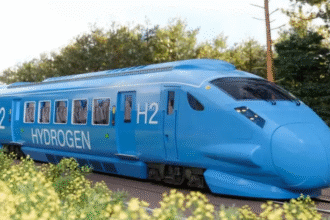
The government is also pushing forward with cleaner-fuel and sustainability initiatives in tandem with the refining boost. This includes efforts in biofuels, green hydrogen, and expansion of cleaner-fuel infrastructure such as compressed biogas (CBG) and sustainable aviation fuel (SAF). Such measures are expected to reduce carbon emissions across sectors like transport, cement, and steel complementing global and national climate goals. 
Industry experts note that the current refining capacity has already grown over the past decade partly driven by rising domestic fuel demand and investments in upgrading existing refineries. The planned jump to 309.5 MMTPA by 2030 is being watched as a key step toward positioning India as a major global refining and petrochemical hub. 
With this expansion, the government aims not only to meet domestic consumption requirements but also to cater to export demand and reduce dependency on imported refined products. The move aligns with India’s broader energy transition vision and increased focus on integrating refining operations with downstream petrochemicals and cleaner fuel alternatives.