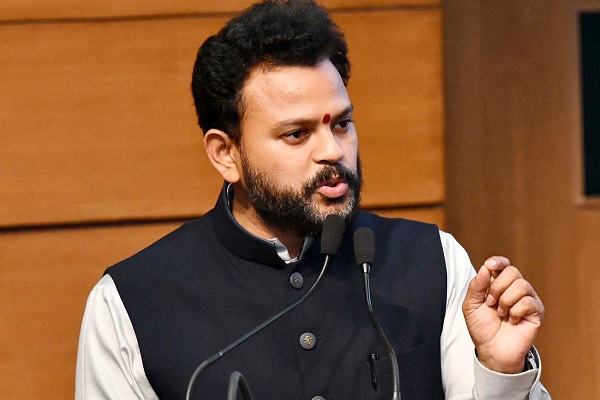
India is set to witness a major expansion of its aviation infrastructure, with the government planning to add around 50 new airports over the next five years and scale the total number to nearly 350 by 2047, Union Minister of Civil Aviation Ram Mohan Naidu said during the World Economic Forum (WEF) in Davos.
The ambitious roadmap is aligned with the government’s long-term vision under the Viksit Bharat 2047 initiative, which aims to transform India into a developed nation by the centenary year of Independence.
Speaking on the sidelines of the global forum, the minister said that airport development is a key pillar of India’s growth strategy. He noted that while around 50 airports are planned in the near term, the broader vision is to significantly expand air connectivity across the country by 2047.
Highlighting the sector’s progress, Naidu said India has emerged as the world’s third-largest domestic aviation market. He attributed this rise not to organic growth alone, but to focused policy reforms, strong capital investment in civil aviation, and a deliberate push to make air travel more accessible while strengthening regional connectivity.
The minister also pointed to the rapid expansion achieved over the past decade. India’s operational airports have increased from 74 in 2014 to around 164 currently. In parallel, Indian airlines have placed nearly 1,700 aircraft orders, a scale he said is unmatched globally. The civil aviation sector continues to grow at an annual rate of over 10–12 per cent, reflecting strong demand and sustained momentum.
Alongside discussions on aviation, several Indian states including Madhya Pradesh, Karnataka, Uttar Pradesh, and Assam are using the WEF platform to engage with global companies and financial institutions. State delegations are holding meetings with international industry leaders from regions such as Europe, Japan, and Sri Lanka to explore investments in infrastructure, industry, and economic development.
The government believes that the planned expansion of airports and aviation capacity will play a critical role in boosting connectivity, investment, and economic growth across regions in the coming decades.