


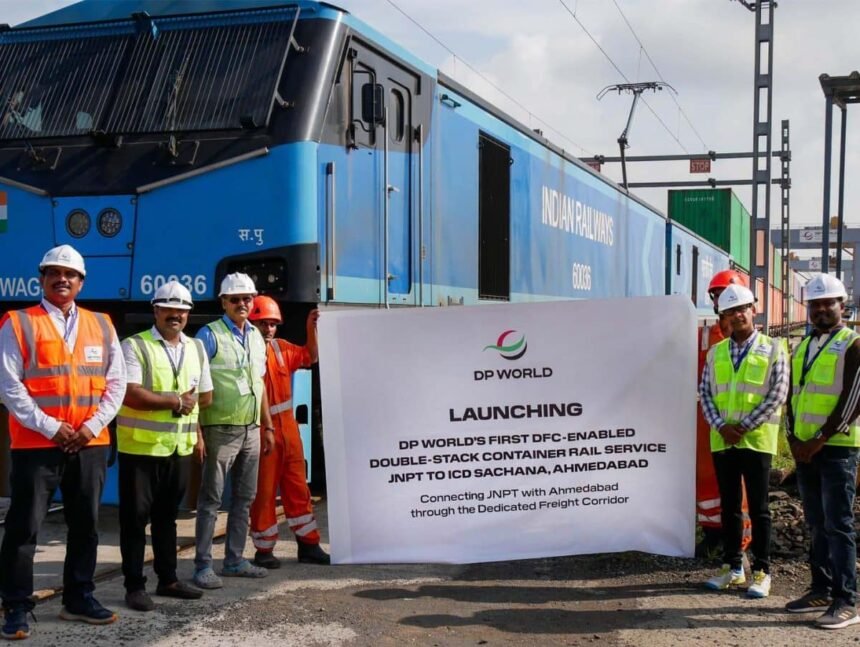
DP World has launched double-stack rail services linking Jawaharlal Nehru Port Authority (JNPA) with the National Capital Region (NCR) and Ahmedabad, expanding rail-based container transportation between one of India’s busiest container gateways and key inland logistics markets.
The services are designed to improve container movement efficiency by transporting two tiers of containers on specially configured rail wagons. The approach increases carrying capacity per train, improves the utilisation of rail infrastructure and offers an alternative to road-based freight transportation for suitable cargo movements.
The new connections strengthen links between JNPA and major consumption and industrial centres in northern and western India. The NCR is a significant market for imported goods and export cargo, while Ahmedabad and the surrounding Gujarat region support a broad industrial and manufacturing base.
By extending its rail logistics network, DP World aims to provide customers with more integrated port-to-inland transportation options. Rail connectivity can help streamline container evacuation from the port, reduce dependence on road transport and improve the movement of cargo between maritime terminals, inland container depots and distribution centres.
Double-stack operations require suitable clearances, infrastructure and rolling stock along the route. Their deployment can help increase freight capacity without requiring a proportional increase in the number of train movements, subject to operational and route constraints.
The initiative forms part of broader efforts to strengthen multimodal logistics in India by integrating port infrastructure with rail and inland distribution networks. Efficient evacuation of containers from major ports is particularly important as trade volumes grow and industrial supply chains require more predictable transportation.
For exporters and importers, the new services offer an additional rail-based option for moving containers between JNPA and inland markets. The extent of cost savings, transit-time improvements and emissions reductions will depend on route conditions, cargo volumes and the comparative performance of rail and road services.