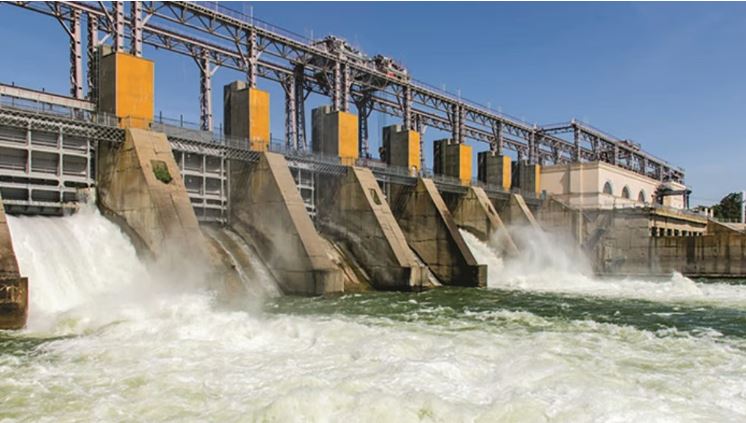
The Union Cabinet has approved an investment of ₹26,069.50 crore for the development of the Kamala Hydro Electric Project (HEP) in Arunachal Pradesh, marking a major boost to India’s renewable energy capacity and infrastructure in the Northeast.
The project will be implemented by NHPC Limited in partnership with the state government, under a joint venture structure aimed at ensuring both central execution strength and regional participation.
With an installed capacity of 1,720 MW, the hydroelectric project will be developed across the districts of Kamle, Kra Daadi, and Kurung Kumey. It will comprise nine generating units (8×210 MW and 1×40 MW) and is expected to generate approximately 6,870 million units (MUs) of electricity annually.
The project has a completion timeline of around 96 months, reflecting the scale and complexity of hydro infrastructure development in the region.
Significant financial support will be provided by the central government to ensure smooth execution. This includes ₹4,743.98 crore for flood moderation, ₹1,340 crore for enabling infrastructure such as roads, bridges, and transmission systems, and ₹750 crore as financial assistance toward the state’s equity share.
Beyond power generation, the project is expected to deliver multiple strategic benefits. It will help strengthen grid stability, support peak demand management, and enhance power supply in the Northeast, while also contributing to flood control in the Brahmaputra basin.
Additionally, the project is set to drive regional socio-economic development, including the creation of infrastructure such as roads, bridges, and community facilities, along with employment opportunities for local populations.
The approval of the Kamala Hydro Electric Project underscores India’s continued push toward expanding clean energy capacity, reducing carbon emissions, and unlocking the hydropower potential of the northeastern region.