


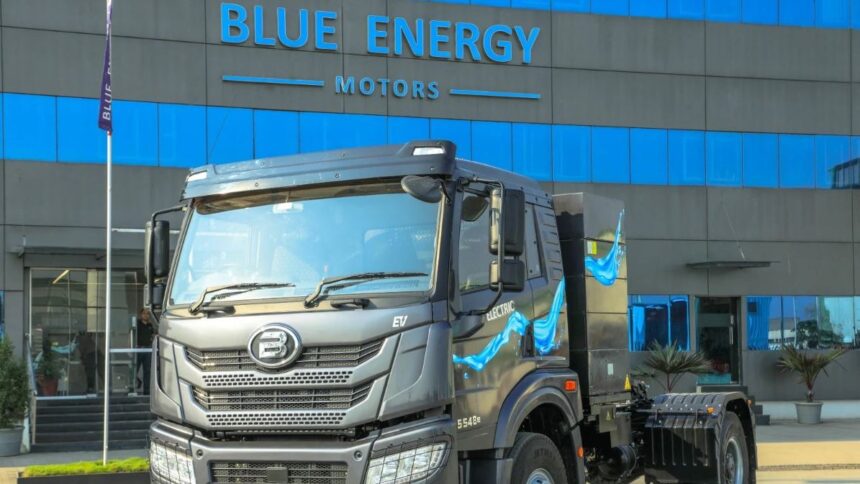
Blue Energy Motors has crossed a major milestone of 100 million kilometres of cumulative fleet operations across India, underscoring the growing adoption of green-fuel technologies in the country’s freight transportation sector.
The company, which manufactures LNG-powered and electric heavy-duty trucks, said the achievement has been driven by a fleet of more than 1,400 commercial vehicles operating on key freight corridors across the country.
According to the company, the fleet has helped reduce more than 30,000 tonnes of carbon emissions, an environmental impact equivalent to the carbon absorption capacity of nearly 1.2 million trees.
Blue Energy Motors stated that the milestone reflects the increasing shift within India’s logistics and transportation industry towards cleaner and more sustainable freight mobility solutions, driven by rising fuel costs, corporate sustainability commitments, and the country’s long-term decarbonisation goals.
The company has developed an integrated clean mobility ecosystem built around LNG and electric heavy-duty trucks, supported by intelligent fleet technology, energy infrastructure, and a nationwide service network.
Its LNG truck portfolio includes dual-tank variants capable of travelling up to 2,400 kilometres on a single fill, enabling long-haul freight operations. In the electric truck segment, the company has established corridor-based charging and battery-swapping infrastructure to minimise downtime and improve fleet productivity.
Commenting on the achievement, Anirudh Bhuwalka, Founder and Managing Director, Blue Energy Motors, said, “Crossing 100 million kilometres is a strong validation of where the future of freight mobility is headed. A few years ago, green-fuel trucking was still seen as an emerging idea. Today, fleet operators are actively looking at cleaner solutions that make sense not only from a sustainability perspective, but also operationally and commercially.”
He further added, “The recent volatility in global energy markets has highlighted a reality that freight operators can no longer ignore. Businesses that remain entirely dependent on diesel are becoming increasingly exposed to fuel-price shocks and supply uncertainties. Energy security, operating economics, and sustainability are no longer separate conversations. They are converging into a single business decision. We believe the next five years will witness one of the fastest transformations in the history of India’s trucking industry.”
The milestone highlights the accelerating transition towards alternative-fuel commercial vehicles in India as logistics companies increasingly focus on reducing emissions, improving fuel efficiency, and building sustainable freight transportation networks.