


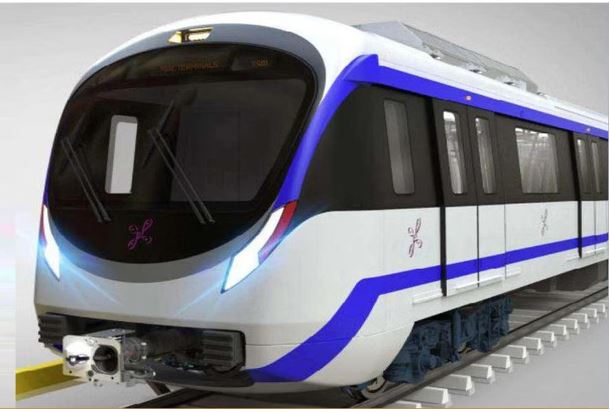
BEML Limited is set to deliver driverless-capable metro trainsets for the upcoming Bengaluru Metro Blue Line, marking a significant step toward automated urban mobility in India.
The trainsets are being developed for Namma Metro Phase 2 corridors, including the 58-km Blue Line connecting Central Silk Board to Kempegowda International Airport, one of the city’s most critical transit routes. Designed with advanced Communication-Based Train Control (CBTC) technology, these trains will support unattended train operations (GoA4 level), enabling fully automated services with minimal human intervention.
The project forms part of a major rolling stock contract under which BEML will manufacture and supply 318 metro coaches for the Blue and Pink Line corridors. These trainsets are being designed, engineered, and built in India, reinforcing domestic manufacturing capabilities in high-end metro systems.
BEML has already rolled out prototype driverless-capable trainsets, and testing activities are currently underway ahead of phased deployment. The trains are designed to handle high passenger volumes, offer improved ride quality, and operate with enhanced safety systems enabled by automation.
Once operational, the driverless-capable trains are expected to significantly improve service frequency, punctuality, and operational efficiency, particularly on high-density corridors such as the airport route. The Blue Line itself is planned to be commissioned in phases, with key sections targeted for rollout around 2026–27.
The deployment reflects a broader shift in India’s metro ecosystem toward smart, technology-driven transit systems, combining automation, digital signalling, and indigenous manufacturing. With this project, BEML continues to strengthen its position in the metro rolling stock segment, while contributing to the evolution of next-generation urban transport infrastructure in the country.