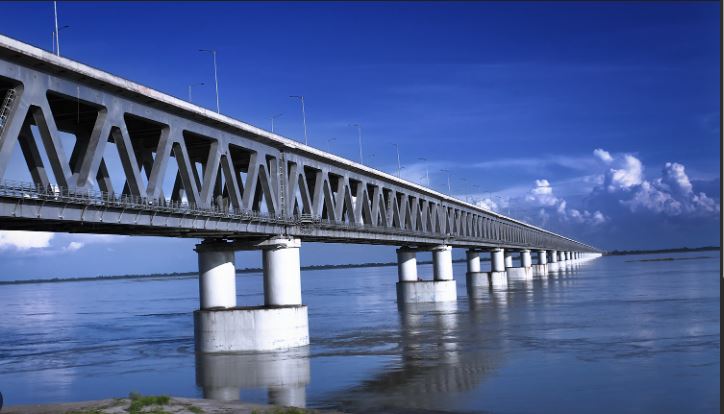
Assam’s infrastructure landscape is being reshaped by a series of major bridge projects that are expected to significantly improve connectivity, enhance economic growth and reduce travel times across the northeastern state, officials and industry experts said.
Over the past few years, Assam has prioritised the construction of key river link bridges to bolster transport links within the state and to neighbouring regions. The state’s geography, crisscrossed by major rivers such as the Brahmaputra and its tributaries, has traditionally posed challenges for road and rail connectivity. Landmark bridge projects now underway are set to address these long-standing constraints.
Among the most high-profile initiatives is the Bogibeel Bridge, which spans the Brahmaputra River and connects the Dibrugarh and Dhemaji districts. The 4.94-km structure, India’s longest rail-cum-road bridge has already enhanced freight and passenger movement by linking the northeastern region with the rest of the country more directly.
Another major project is the Dhola-Sadiya Bridge (Bhupen Hazarika Setu), which connects southern Assam with Tinsukia district, significantly shortening travel distance and boosting socio-economic activity between major urban and rural centres. The 9.15-km bridge has become a critical link facilitating seamless movement of goods and people in the eastern part of the state.
Assam is also advancing other strategic river crossings, including the Kolia Bhomora Setu over the Brahmaputra near Tezpur and the Naranarayan Setu, which has strengthened connectivity between Bongaigaon and Kokrajhar districts. Together, these bridges are improving accessibility to remote areas, enabling better market linkages and facilitating easier access to health, education and employment opportunities.
Officials said the state government’s focus on bridge infrastructure aligns with broader goals to integrate Assam’s transport network with national and regional corridors, expanding economic opportunities and reducing regional disparities. By cutting travel times substantially, these bridges are expected to lower logistics costs, attract investment and support tourism growth.
In addition to their economic impact, the bridges have strategic significance for defence mobility and disaster management, given the region’s proximity to international borders and its vulnerability to seasonal flooding.
Infrastructure authorities said that continued investment in river bridges, along with complementary road and rail links, will help build a more resilient and efficient transport ecosystem in Assam. Future projects in the pipeline aim to further strengthen cross-river connectivity and accelerate the state’s growth trajectory.
The series of landmark bridge projects in Assam exemplifies how targeted transport investments can transform regional connectivity and contribute to broader socio-economic development goals.