


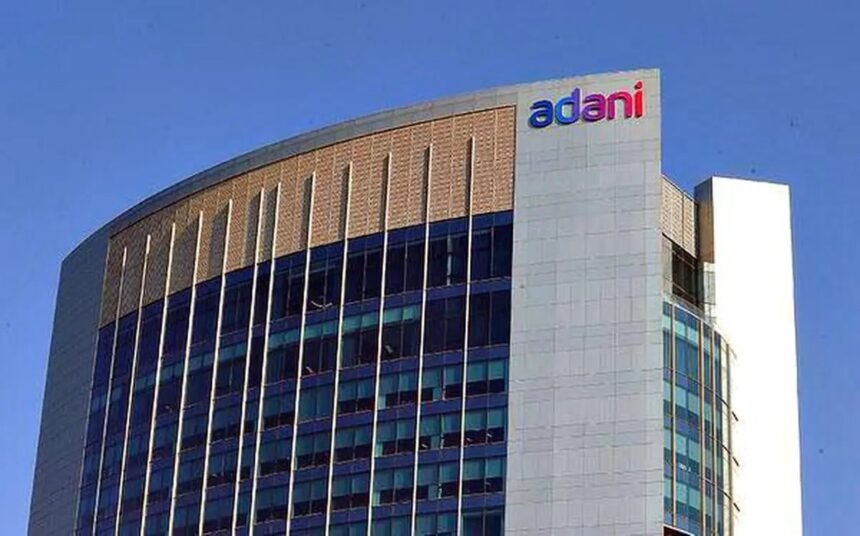
The Adani Group is pursuing and executing infrastructure and industrial projects worth around ₹5 lakh crore across several states, with investments spanning roads, ports, power, renewable energy, cement, airports, logistics and data centres.
The group’s growing project pipeline includes major developments in Karnataka, Kerala, Telangana, Tamil Nadu, Himachal Pradesh, Jharkhand, Bihar and Andhra Pradesh, reflecting its expanding presence across multiple infrastructure segments.
In Karnataka, Adani Enterprises has emerged as the lowest bidder for both packages of the proposed 16.75-km north-south tunnel road connecting Hebbal and Central Silk Board in Bengaluru. The company submitted a bid of ₹22,267 crore, which was around ₹3,500 crore lower than the second-lowest bid. The contract, however, is yet to be finalised.
The tunnel road project is aimed at addressing Bengaluru’s traffic congestion. The Adani Group already has a significant presence in the state through the 1,200-MW Udupi power plant and Mangaluru International Airport.
In Kerala, Adani Ports and Special Economic Zone developed the Vizhinjam International Seaport, a deep-water container transhipment facility. The group launched the second phase of the port in January 2026 with an additional investment of ₹16,000 crore, taking its cumulative investment in the project to around ₹30,000 crore.
The group also operates Thiruvananthapuram International Airport and began construction of a logistics park at Kalamassery in Kochi in 2025. The more than ₹600-crore project is spread across 70 acres and is expected to generate over 1,500 jobs.
Telangana is another major investment destination for the group. Adani Group companies signed four memoranda of understanding in January 2024 involving investments of ₹12,400 crore. The proposed projects cover data centres, energy storage, defence manufacturing and other areas.
In Tamil Nadu, the group announced investment proposals of more than ₹42,700 crore in 2024. These include ₹24,500 crore for three pumped-storage projects, ₹13,200 crore for a hyperscale data centre and ₹3,500 crore for cement grinding units. Separately, Adani Enterprises secured the operation, maintenance and tolling concession for the Chennai Outer Ring Road with a financial bid of ₹2,511 crore.
The group’s activities also extend to Himachal Pradesh, where it is working with apple growers to strengthen the regional fruit supply chain and operates cement assets. In Jharkhand, Adani operates the 1,600-MW Godda ultra-supercritical power plant, built with an investment of more than ₹16,000 crore.
Bihar has emerged as another significant area of planned investment. The group announced plans in May to invest ₹50,000-60,000 crore in the state over the next three to four years across power, roads, gas distribution, cement and other infrastructure sectors. The plans include a ₹27,000-crore, 2,400-MW ultra-supercritical thermal power project at Pirpainti in Bhagalpur district.
Andhra Pradesh is also part of the group’s expanding technology and infrastructure portfolio. AdaniConneX and Airtel are infrastructure partners in Google’s proposed artificial intelligence hub at Visakhapatnam, where Google has committed around $15 billion between 2026 and 2030. The project involves large-scale data-centre capacity along with supporting energy infrastructure and subsea connectivity.
Beyond the Visakhapatnam development, the group has a presence in Andhra Pradesh through Krishnapatnam Port as well as renewable energy and transmission projects. It is also investing more than ₹20,000 crore in renewable energy infrastructure, including pumped-storage projects and transmission lines.
The project pipeline adds to Adani Group’s broader investment programme across infrastructure, energy, logistics and technology, with large-scale developments being taken up in sectors critical to India’s connectivity, energy transition and industrial growth.