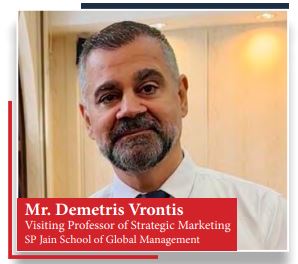
Mr. Demetris Vrontis, Visiting Professor of Strategic Marketing, SP Jain School of Global Management
Vietnam’s manufacturers are adapting to tougher competition and rising sustainability demands. The best results come from smarter management that values people, knowledge, and accountability. Their practices offer valuable guidance for leaders seeking to enhance performance and foster long-term growth.
Successful Vietnamese manufacturers make learning an integral part of their everyday work. They value employee knowledge as a resource and build routines that encourage sharing and problem-solving. Brief meetings and open communication between teams facilitate the rapid dissemination of ideas. Companies that train regularly and invite staff to suggest improvements report stronger productivity, teamwork, and innovation. When learning becomes routine, employees take greater
ownership and adapt quickly to change.
Environmental compliance has also become a major driver of performance. Many companies used to view regulations as extra work. The best performers now see them as opportunities to improve efficiency and competitiveness. Factories that invested in clean technology, modern waste treatment, and international standards such as ISO 14001 or the Higg Index have reduced costs and gained stronger reputations with buyers at home and abroad. When sustainability targets are integrated into production plans and reviewed regularly, compliance stops being a burden and becomes a way to achieve better results.
Digital communication is another management area showing strong results. Several manufacturers have begun using social media and internal platforms as practical tools for coordination and knowledge sharing. Production managers use them to distribute quick updates and gather feedback from teams. Engineers use them to follow design trends and discuss solutions. This kind of direct communication saves time, strengthens collaboration, and keeps everyone better informed. Social media, when used purposefully, becomes an inexpensive channel for continuous learning and faster decision-making.
Innovation is another crucial factor that ties all aspects of performance together. In many Vietnamese firms, innovation is no longer limited to research departments. It has become part of daily work for everyone. Managers whoencourage employees to share ideas and give recognition for even small improvements create a culture of participation and progress. Some of the most effective changes come from simple, practical ideas generated on the production line.
When employees see that their ideas are heard and acted on, they take pride in the results and look for more ways to improve. Sustainability and innovation work best when they are managed together. Companies that trained their employees in sustainable practices and applied that knowledge to refine their production methods saw higher efficiency and improved product quality. At several factories, environmental goals were included in employee evaluations and performance indicators. This approach helped teams understand how their efforts supported broader business objectives.
When employees see how sustainability contributes to success, engagement and creativity naturally increase. Circular economy thinking is also gaining attention across Vietnam’s manufacturing sector.
Many firms now reuse materials, recycle offcuts, and seek ways to minimize waste. Some have installed solar panels to lower energy costs, while others have found new uses for leftover materials that were once discarded. These actions help reduce costs and build a reputation for responsible production. Managers who start by mapping where resources are used and where
waste occurs often find simple opportunities for savings. Even small steps, such as reusing packaging or redesigning processes to avoid excess material, create measurable benefits over time.
The best-performing companies effectively integrate all these elements. They align training, technology, and sustainability into a single management framework. When new equipment is introduced, employees are trained immediately, and results are communicated clearly throughout the organization. Everyone understands the purpose of the change and how it supports broader goals. This kind of integration ensures that improvements in one area support progress in others. It helps companies move forward consistently rather than relying on isolated initiatives.
From the collective experience of Vietnamese manufacturers, several lessons for leaders become clear. Skilled and informed employees are the foundation of strong performance. Environmental responsibility, when managed proactively, leads to efficiency and new market opportunities.
Digital communication improves coordination and accelerates learning. Managers who apply these lessons create organizations that learn faster, waste less, and adapt better to the demands of modern manufacturing. Vietnam’s manufacturing experience demonstrates that growth and sustainability can work hand in hand. The companies achieving
the best results are those that combine capable people, innovation, and responsible management practices. Their example shows that the future of manufacturing will belong to businesses that think ahead, manage knowledge wisely, and link
sustainability directly to performance. Success is no longer about producing more but about producing smarter.
This article is adapted from the paper: Truong, B. T. T., Nguyen, P. V., Vrontis, D., & Inuwa, I. (2024). Exploring the interplay of intellectual capital, environmental compliance, innovation and social media usage in enhancing business performance in Vietnamese manufacturers. Journal of Intellectual Capital, 25(2/3), 488-50