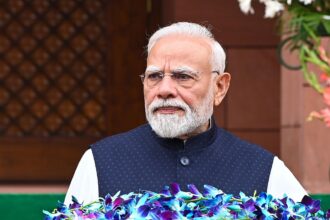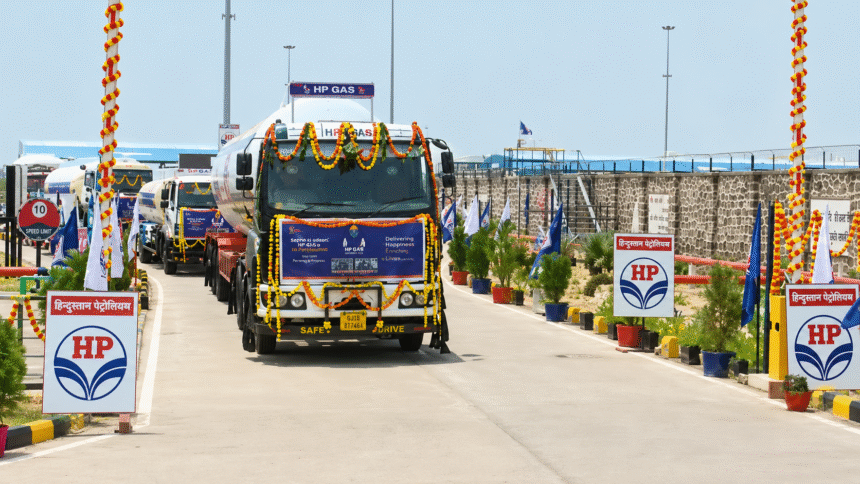
The dedication of HPCL Rajasthan Refinery Limited’s (HRRL) Integrated Refinery-cum-Petrochemical Complex at Pachpadra, Balotra, by Prime Minister Narendra Modi marks a significant milestone in India’s energy and industrial development. Developed as India’s first greenfield integrated refinery-cum-petrochemical complex, the 9 MMTPA facility has been established through a joint venture between Hindustan Petroleum Corporation Limited (HPCL) and the Government of Rajasthan.
Addressing the inauguration ceremony, Prime Minister Narendra Modi described the Rajasthan Refinery as a key driver of regional development. He stated that the large-scale project would provide long-term employment opportunities for thousands of people and congratulated the youth of Rajasthan on the achievement.
The refinery is expected to strengthen India’s energy security and enhance petrochemical self-sufficiency. Complementing the industrial complex is the HRRL Township in Barmer, designed by CP Kukreja Architects. Conceived as a self-sustaining residential community for HRRL personnel, the township integrates climate-responsive planning, community-focused development and environmental resilience.
Spread across 248 acres in the Thar Desert, the township accommodates residential, institutional, civic and security infrastructure. Designed to address the challenges of saline soil conditions, limited groundwater availability and summer temperatures exceeding 50°C, the development offers a sustainable model for desert habitation.
A key feature of the master plan is the adaptation of the traditional Rajasthani “johad” water-retention system. The design channels, slows, filters and recharges monsoon runoff, creating a hydrological framework around which housing clusters, recreational spaces, social amenities and public facilities are organised. This approach integrates water management with the township’s urban structure.
The project has been recognised with the prestigious national HUDCO Design Award and has also secured a 4-Star Rating under the GRIHA Large Developments category. The recognition highlights its commitment to sustainable planning, climate-responsive architecture and socially responsible industrial housing.
Environmental measures implemented across the township include 100% rooftop rainwater harvesting, a 2 MLD sewage treatment plant with dual plumbing for water reuse, 12 recharge pits, solar-powered street lighting, native xeriscape landscaping and the plantation of more than 5,000 indigenous trees. These initiatives have reduced potable water demand by 45% and lowered energy demand through passive cooling strategies by 38%.
Architectural features have been specifically designed to address Barmer’s harsh climatic conditions. The development incorporates thermal mass construction, shaded fenestration, recessed openings, high-SRI roof coatings, cross-ventilation systems, internal courtyards and traditional elements such as jaalis and jharokhas where environmentally beneficial. More than 30% of the site has been preserved as functional open space, with over 75 acres dedicated to landscaped areas, shaded streets, pedestrian pathways and community-use zones.
The township has also been developed as a comprehensive civic ecosystem. Facilities including schools, anganwadis, retail spaces, a guest house, club, auditorium, township offices and security infrastructure are connected through an integrated pedestrian network. Public spaces have been distributed through shaded walkways, courtyards and communal areas, fostering social interaction while maintaining environmental sensitivity.
Commenting on the project, Dikshu C. Kukreja, Managing Principal, CP Kukreja Architects, said, “Large infrastructure is often measured by capacity, output and investment. But its deeper legacy lies in the lives it sustains around it. At Barmer, our endeavour was to design not just a township, but a resilient civic system that listens to the desert. The HRRL Township draws from indigenous water wisdom, passive design and community-centred planning to create a model of habitation that conserves, adapts and endures. It demonstrates that even in one of India’s most demanding climates, architecture can become an instrument of ecological balance and social continuity.”
The HRRL Refinery and Township together position Barmer as a key centre in India’s next phase of industrial expansion. The integrated development represents not only a major advancement in energy infrastructure but also a broader vision for sustainable and future-ready growth in arid regions, where industrial progress is supported by environmentally responsible and community-oriented urban development.