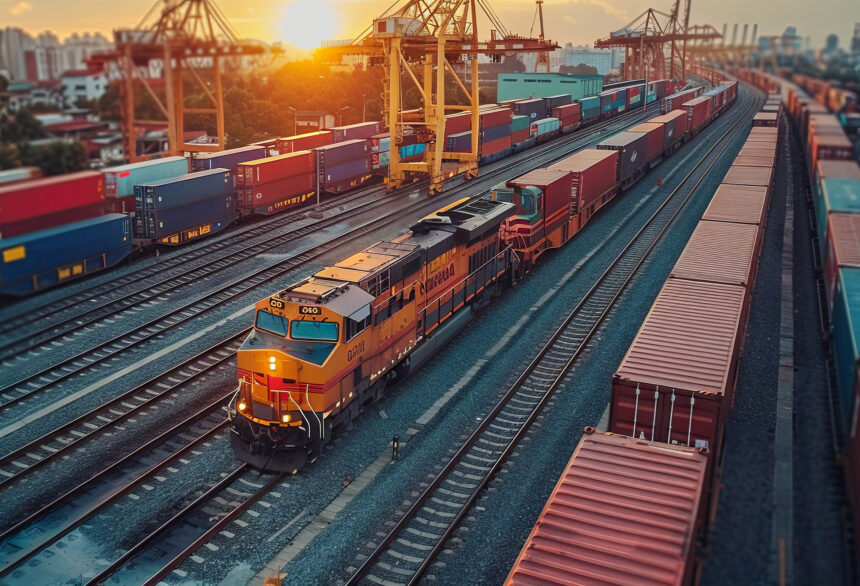
India has entered the league of nations operating heavy-haul freight railway systems, a milestone that is expected to strengthen freight transportation efficiency and support efforts to reduce logistics costs across the country. The development was highlighted by Dedicated Freight Corridor Corporation of India Limited (DFCCIL) Managing Director Praveen Kumar during the International Heavy Haul Seminar 2026 held at Bharat Mandapam in New Delhi.
Praveen Kumar noted that only a handful of countries, including the United States, China, Australia, Brazil, Sweden, and South Africa, operate heavy-haul railway systems. With the commissioning of the Eastern and Western Dedicated Freight Corridors, India has now joined this select group of nations.
The two-day seminar brought together international experts, railway professionals, technology providers, researchers, and policymakers to discuss advancements in heavy-haul rail operations and the future of freight transportation. The event focused on sharing global best practices and technological innovations that can enhance the safety, reliability, and efficiency of freight rail networks.
A key theme of the discussions was the adoption of advanced technologies such as AI-based predictive maintenance, autonomous inspection systems, monitoring technologies, and intelligent maintenance solutions. These technologies are expected to play an increasingly important role in improving asset reliability and operational performance across India’s freight railway infrastructure.
Reducing logistics costs remains one of the primary objectives behind the Dedicated Freight Corridor programme. According to DFCCIL, logistics costs in India are estimated at around 13–14 per cent of GDP, significantly higher than the global average of 7–8 per cent. Dedicated freight infrastructure has been developed to improve freight movement efficiency and help narrow this gap.
Praveen Kumar stated that studies have already indicated a reduction in logistics costs following the operationalisation of the Eastern and Western Dedicated Freight Corridors. The corridors have improved freight movement by separating cargo traffic from passenger rail operations, enabling faster and more efficient transportation of goods.
DFCCIL is preparing to play a central role in the development of the proposed East–West Dedicated Freight Corridor, announced in the Union Budget 2026. The corridor will connect Dankuni in West Bengal with the Surat region in Gujarat and is expected to span approximately 2,100 kilometres with double-line electrified tracks.
The new freight corridor is expected to further expand India’s dedicated freight network, strengthen multimodal logistics connectivity, support industrial development, and enhance the efficiency of long-distance cargo transportation. As the country’s freight infrastructure continues to evolve, heavy-haul railway operations are expected to become a key pillar of India’s strategy to improve competitiveness, lower logistics costs, and support long-term economic growth.