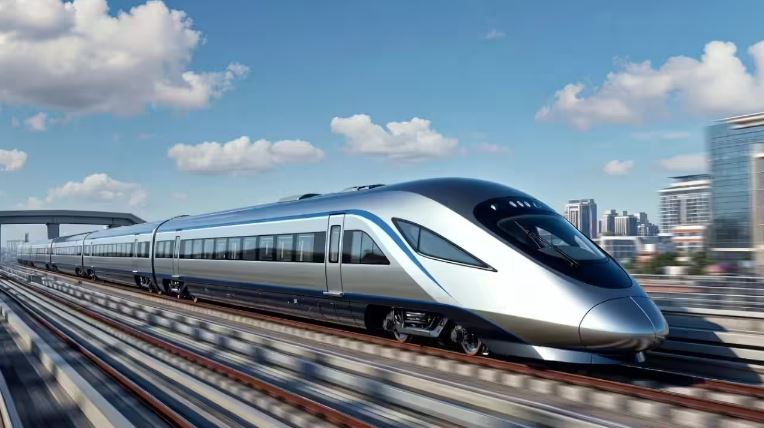
The proposed Delhi–Varanasi High-Speed Rail Corridor is expected to significantly strengthen connectivity for industrial townships being developed by the Yamuna Expressway Industrial Development Authority (YEIDA), with new bullet train stations planned in Agra and Mathura along the corridor.
The high-speed rail project, one of India’s most ambitious transportation infrastructure initiatives, is designed to connect Delhi with Varanasi through key cities across Uttar Pradesh while supporting industrial development, economic integration, and regional urbanisation.
According to reports, the planned bullet train alignment will pass through major growth zones along the Yamuna Expressway region, creating new opportunities for industrial clusters, logistics parks, residential townships, manufacturing hubs, and commercial developments being promoted by YEIDA.
Officials stated that proposed stations in Agra and Mathura are expected to emerge as important economic and mobility hubs under the high-speed rail network. These stations are likely to improve access to industrial corridors, tourism circuits, and urban expansion zones across western and central Uttar Pradesh.
The Delhi–Varanasi bullet train corridor is being developed by the National High Speed Rail Corporation Limited (NHSRCL) as part of India’s long-term high-speed rail expansion programme. The project aims to dramatically reduce travel time between major cities while introducing world-class rail mobility infrastructure.
The corridor is expected to pass through several districts including Delhi, Noida, Mathura, Agra, Lucknow, Prayagraj, and Varanasi. Once operational, the high-speed rail system could substantially improve passenger mobility, business travel efficiency, and economic connectivity across northern India.
Industry experts noted that integration of bullet train infrastructure with industrial development zones could significantly accelerate regional economic growth. Improved transportation access often attracts investment in manufacturing, warehousing, logistics, hospitality, commercial real estate, and urban infrastructure.
The Yamuna Expressway region has already emerged as one of North India’s fastest-growing infrastructure and industrial corridors due to large-scale projects such as the Noida International Airport at Jewar, film city development, electronics manufacturing clusters, logistics parks, semiconductor proposals, and integrated townships.
Officials believe the addition of high-speed rail connectivity could further strengthen the attractiveness of YEIDA’s industrial and urban development ecosystem by improving connectivity between Delhi NCR and major cities in Uttar Pradesh.
The proposed Agra and Mathura bullet train stations are also expected to support tourism growth by improving accessibility to globally significant heritage destinations including the Taj Mahal, Vrindavan, and other religious and cultural centres. Faster connectivity may encourage higher tourist inflow and boost hospitality-related investments across the region.
India’s high-speed rail ambitions are currently centred around multiple proposed corridors following the ongoing Mumbai–Ahmedabad Bullet Train project. The Delhi–Varanasi corridor is considered strategically important due to its high passenger demand potential, economic significance, and connectivity with major population centres.
Infrastructure analysts believe the project could reshape urbanisation patterns and economic geography across Uttar Pradesh by creating new transit-oriented development corridors around proposed stations. High-speed rail infrastructure is increasingly being viewed not only as a transportation project but also as a catalyst for industrial expansion, real estate growth, and regional economic transformation.
As planning and alignment studies continue, the Delhi–Varanasi Bullet Train Corridor is expected to play a critical role in strengthening India’s next-generation transportation network while supporting industrial growth and urban development across one of the country’s fastest-growing economic regions.