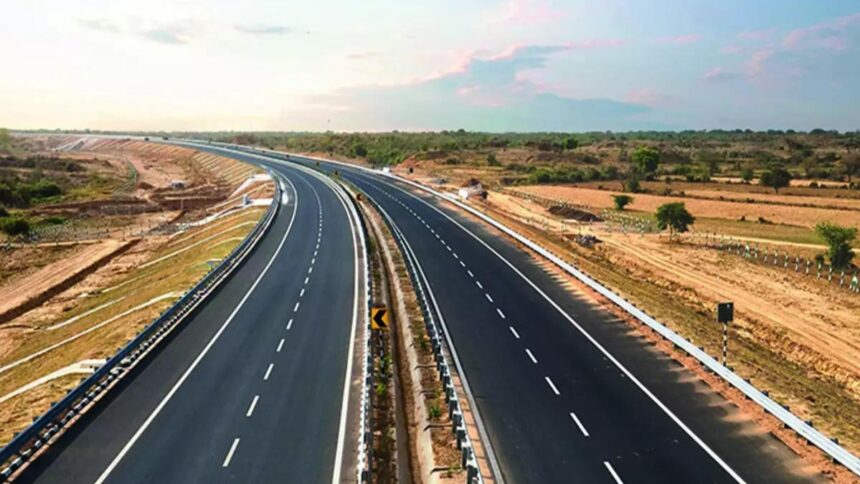
The Ministry of Road Transport and Highways has approved a major ₹1,428 crore infrastructure project for the construction of a four-lane bypass around Thiruvarur in Tamil Nadu, aimed at easing urban congestion and improving regional highway connectivity in the Cauvery Delta region.
The project has been sanctioned under the Hybrid Annuity Model (HAM) and will involve the development of a new bypass corridor connecting key sections of National Highway infrastructure passing through Thiruvarur district.
According to officials, the proposed bypass will help decongest traffic movement within Thiruvarur town by diverting long-distance freight and passenger vehicles away from densely populated urban stretches. The corridor is expected to improve travel efficiency, reduce travel time, and strengthen connectivity between major economic and transport corridors in central Tamil Nadu.
The four-lane bypass project forms part of broader efforts by the central government to upgrade highway infrastructure across Tamil Nadu and improve logistics connectivity in southern India. The state has been witnessing significant investment in expressways, national highways, port connectivity roads, industrial corridors, and urban transport infrastructure over the past few years.
Officials stated that the bypass is expected to improve traffic flow for vehicles travelling toward Nagapattinam, Thanjavur, Karaikal, and other important districts in the delta region. The project could also enhance freight movement efficiency for agricultural produce, industrial goods, and port-linked logistics activities.
Thiruvarur district remains an important agricultural region in Tamil Nadu, particularly known for paddy cultivation and delta-based farming activities. Improved road connectivity is expected to support rural economic activity, market access, and transportation of agricultural commodities across the region.
The Hybrid Annuity Model being used for the project combines government funding support with private sector participation. Under the HAM framework, the government bears a portion of the project cost during construction while the remaining investment is financed by private concessionaires and repaid over time through annuity-based payments.
Industry experts noted that bypass projects are becoming increasingly important in India’s highway expansion strategy as rising vehicle volumes continue to place pressure on urban roads and existing highway networks. Bypass corridors help improve traffic management, reduce fuel consumption, lower emissions, and enhance road safety by separating through-traffic from local traffic movement.
The project is also expected to generate construction activity and employment opportunities during the execution phase while supporting ancillary sectors linked to road building, logistics, equipment, materials, and transportation services.
India’s road infrastructure sector is currently undergoing one of its largest expansion phases with major investments in expressways, economic corridors, greenfield highways, ring roads, bypasses, tunnels, and multimodal logistics networks under initiatives such as Bharatmala Pariyojana and PM Gati Shakti. Tamil Nadu remains among the leading states in terms of highway density and industrial connectivity infrastructure.
Infrastructure analysts believe the Thiruvarur bypass project could significantly improve regional mobility and strengthen long-term economic integration across the Cauvery Delta region. The project is expected to contribute to smoother transportation networks and support future growth in trade, agriculture, tourism, and industrial development across central Tamil Nadu.