Indian Railways has undergone one of the world’s largest rail electrification and freight transformation programmes over the past four decades, sharply reducing diesel dependence while massively increasing freight movement across the national network. However, a recent judicial intervention linked to locomotive procurement and electrification strategy has triggered fresh debate over the pace and economics of the railway modernisation drive.
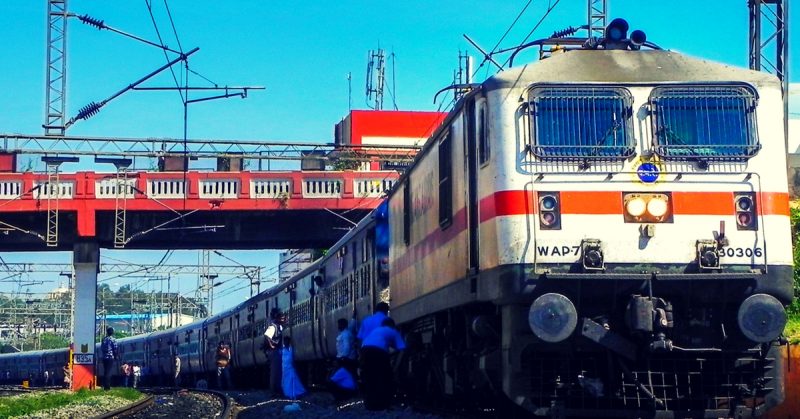
According to railway data and policy assessments, Indian Railways today consumes less diesel than it did in 1980 despite transporting nearly eight times more freight traffic compared to the early 1980s. The shift has largely been driven by aggressive electrification, deployment of high-powered electric locomotives, improved freight operations, and network modernisation initiatives.
Indian Railways’ electrification journey has accelerated dramatically over the last decade. Official railway records show that only about 5,345 route kilometres (RKMs) were electrified by 1981. By March 2024, the electrified network had expanded to more than 62,253 RKMs, covering nearly 90 per cent of the broad-gauge network, while current estimates indicate electrification has now crossed 99 per cent of the system.
Railway officials state that the transformation has significantly reduced diesel consumption and import dependence. Recent government data shows Indian Railways has cut diesel use by nearly 178 crore litres compared to 2016-17 levels, helping reduce fuel expenditure and India’s vulnerability to global crude oil price fluctuations.
The freight sector has emerged as a major beneficiary of the electrification push. Indian Railways today operates heavier and longer freight trains using high-horsepower electric locomotives capable of hauling significantly larger cargo volumes with lower operational costs. Modern electric traction has also improved train acceleration, reduced turnaround time, and increased corridor capacity across high-density freight routes.
The expansion of Dedicated Freight Corridors (DFCs), line doubling, automatic signalling, and upgraded traction systems has further strengthened freight movement efficiency. Railway economists note that Indian Railways now handles substantially larger freight volumes with far lower energy intensity per tonne-kilometre compared to previous decades.
However, the rapid transition has also sparked debate within railway policy circles. Concerns have emerged regarding the future utilisation of thousands of diesel locomotives procured before the full-scale electrification push accelerated. Critics argue that complete electrification of low-density routes may not always be economically optimal due to the high capital cost of overhead infrastructure on lightly used sections.
The issue gained renewed attention following court-linked scrutiny and policy discussions surrounding locomotive procurement and operational planning. Questions have reportedly been raised regarding balancing electrification targets with asset utilisation efficiency, especially as Indian Railways continues to maintain a sizable diesel locomotive fleet for strategic, operational, and emergency requirements.
Railway experts note that diesel locomotives still remain important for specific operational scenarios including disaster response, military logistics, shunting operations, and non-electrified sidings. Even globally, several advanced railway systems continue to maintain mixed traction fleets despite extensive electrification.
The transformation of Indian Railways is increasingly being viewed as one of the country’s most significant infrastructure modernisation achievements. From a largely diesel-dependent system in the late twentieth century, the network has evolved into one of the world’s largest electrified railway systems while simultaneously expanding freight capacity, passenger mobility, and logistics efficiency on an unprecedented scale.